

Art, Faith, and Community: The Life and Legacy of Calvin and Nelia Kimbrough Creating Belonging Through Art






Show Notes: To Be and Do
In this heartfelt episode of the “To Be and Do” podcast, host Phil Amerson reconnects with Calvin Kimbrough and Nelia Kimbrough, two extraordinary artists and community builders whose creative journeys have shaped not only their own lives, but entire neighborhoods and faith communities. Together, they explore the transformative power of art, the resilience of faith communities, and finding joy—even in tough times.
Three Takeaways from the Episode:
1. Creativity as Freedom and Transformation
Nelia Kimbrough shares how her creative life began with humble adult education art classes and evolved into running a studio and gallery in her neighborhood. Her story is a testament to the freedom and possibility that art offers—even when resources are limited. Whether making paper baskets from recycled church bulletins or experimenting with new materials, Nelia highlights how creativity can turn the everyday and even the discarded into something meaningful. For her, working with her hands is not just a pastime—it’s a source of grounding and hope, especially in difficult seasons.
2. Art as Witness and Relationship
Calvin Kimbrough delves into his decades of documenting community life, especially among vulnerable populations. His photography and portraiture at Patchwork and the Open Door Community not only preserve memories but create opportunities for connection and affirmation. Calvin shares a powerful moment when a homeless man asks him, “What are you looking for when you take our picture?” This leads to a discussion about the give-and-take of meaningful human encounters, and how art can help us see each other more fully.
3. Building Community and Resistance in Troubled Times
As the conversation shifts to the future, both Kimbroughs reflect on how faith and creativity are essential tools for building nurturing, inclusive, and resistant communities. Drawing on scriptural themes, Nelia Kimbrough encourages listeners to persist in forming “communities of love and nurture and resistance” even amidst societal exile or upheaval. Calvin Kimbrough voices hope in the rising generation of activists and leaders relentlessly working for justice in areas like housing, LGBTQIA+ rights, and gun control.
The episode wraps with reflections on the small joys—from women’s basketball to crafting—reminding us that the connection between what we see, create, and share with our hands is a powerful source of meaning and resilience.
Tune in for this inspiring conversation about the intersection of art, faith, and action, and discover ways creativity can help us all belong and build a better world.
Phil Amerson [00:00:00]:
Hello again, everyone. This is Phil Amerson with the Belonging Exchange podcast. To Be and To do and wow. We've already visited with Calvin and Nelia Kimbrough, and they're back. And we're going to now talk a little bit about what art has meant in their lives and in their ministry, and we might even tell a story or two and dream some about the future.
Calvin Kimbrough [00:00:27]:
So.
Phil Amerson [00:00:28]:
So I don't know which one of you wants to start, but both of you are artists in more than one medium, so who wants to go first?
Nelia Kimbrough [00:00:40]:
Well, in my growing up, I didn't really have much of an availability to art schools. And all the universities I chose at the time I went there did not have active art department. But when we moved to Evansville to start Patchwork, we moved in in August. And one Sunday morning early on, I looked at the newspaper and there was an advertisement for adult education classes at the local university. And it was $25 for six weeks. And I thought, hey, we're poor, but I can afford $25. And so that started me off on a wonderful journey of working with clients. I had a vision of having a studio and a gallery in our neighborhood, and that came to be for a time.
Nelia Kimbrough [00:01:29]:
And one of the wonderful things that happened one day in the studio and gallery, I was working there alone, and I had a partner, but she wasn't there that day. And there had been a snow, but it was melting, but the kids were out of school. And so a group of boys rode up on their bicycles and kind of. I could see them looking in the windows.
Calvin Kimbrough [00:01:51]:
And finally, when it might help to know that this was a storefront, big windows in the front.
Nelia Kimbrough [00:01:57]:
Yeah, yeah. And so one of them comes in and stands, you know, and stands and looks at me and says, you know, what is this place? And so I kind of took him around and showed him, and then he went back out, and the second one came in and looked all around, and. And then he went out. The third one came out, came in, he said, right in the middle of the floor. And he says, is it true you can make anything in the world in here? And I said, yes, as long as it's out of clay or wood. And with that, he was happy, and they left. So I think I have spent my art career being intrigued by things I didn't get to study and latching onto them and trying to do it, but always with that kind of. That sense of being free to make anything in the world I want to do, even out of trash.
Nelia Kimbrough [00:02:50]:
So that's been kind of My inspiration, a recent art form that I'm doing now is that I'm making paper baskets and I'm making some of them out of the church bulletins that we have at Belmont unionc. So there's something, some way to use bulletins and to make them into art.
Calvin Kimbrough [00:03:13]:
Talk about the 2D and the 3D thing.
Nelia Kimbrough [00:03:15]:
Oh, okay. So my understanding of this is that for those of us who still have bulletins in the church, you, you design a worship service and then you commit that to 2 to 2d on a paper that says this is what's going to happen. And then it happens. And there's this 3D event based on this paper, but then that's over. And then there's this 2D paper that gets thrown away unless someone collects it and cuts it up and makes it into a basket in which it becomes a three day rendition of what happened in the midst of the community.
Phil Amerson [00:03:54]:
Oh, how wonderful.
Calvin Kimbrough [00:03:57]:
So one of the practices of mine for at both patchwork for 29 years and, and then, well, we lived at the Open door community for 12 years, but I started going down there to make photographs probably over a period of 20 years has been to, to kind of. Well, one part of it has been just to document the things that happen and how we've done various different kinds of ministry. And that included a patchwork, you know, documenting what the children did in the art program or what happened in the food pantry or what other kinds of activities that we were a part of, like going down to the congressman's office or having a march about something. So those kinds of things have been documented. And, and then the other part has been doing portraits of people. And of course at Patchwork there were both adults and children to do portraits of. And, and that was a large part of, of what I did there. And it was a great way to watch, in the case of patchwork, children grow up.
Calvin Kimbrough [00:05:25]:
And in fact, there were children that came back with their children that wanted their pictures made together. And there were children who grew up in the program who came back because the lives that they lived took away the pictures that they had been given when they were there, either by fire or just by the fact that they moved all the time and various things got lost. So it was always wonderful to be looking around to find a picture to give them or pictures to give them of themselves from several years earlier. And then at the Open Door, one of the things that I did was to shoot portraits of the folks that we worked with and the folks that we lived with. And that Included people who were homeless and people who had been homeless and those of us who had always been housed. Probably one of the best questions that I ever got asked was by a homeless man whose name was Charles. And I was making his picture. And no, it was when he saw his picture, you know, a shot mostly from shoulder up of himself.
Calvin Kimbrough [00:06:47]:
And he saw this Picture in a 20 by 24 size, printed very nicely. And he said, what are you looking for when you take our picture? And it was a great question. And my response was that I'm one, looking for what you want to show me, and secondly, looking for what I can see. And we're limited, you know, by what we can see, and we're also limited by what somebody else wants to show us. But that's been the process all along is how you establish a relationship and how somebody decides what they're going to show me and what I actually then see.
Phil Amerson [00:07:35]:
So those of you who've had the privilege of seeing some of the art will know how remarkable their work is. As they were talking, I was thinking of various pots that Neilia had thrown or Christmas ornaments, and my goodness, we still treasure them and use some at Christmas. And Calvin, I don't know that I've known anyone that captures humanity and community like you do I. People who didn't have the privilege of seeing the work you did when you worked with the NBC affiliate in Evansville and you would capture an event, whether it was a school board meeting or a picnic, and you would, you. You would humanize it in ways that just were always astonishing to me. Or maybe it was a car show and it was the most beautiful video that was on TV that month. Incredible gifts that you provided that for me always, how to say this, were cautionary in the sense that I wasn't always seeing as fully as you two artists were seeing. And that was a great gift.
Phil Amerson [00:09:10]:
So out of. Out of our experience, but primarily yours, any hunches about the future and what. I mean, we're in some pretty troubled times right now. How will people of faith best spend our. Our time in the. In the months, years and decades ahead?
Nelia Kimbrough [00:09:39]:
Well, one of the things that's been important for me since our. During our time at Petchwork were the scriptures from Isaiah and Jeremiah and the writing about what happens with people in exile and the promise from God that we will be brought out of exile, that the exile will not determine our beings. And as I thought about our time, especially in the beginning of patchwork, it was troubled times there too, but we were very involved in being in the neighborhood, being a part of the neighborhood, and seeing how we could respond given the gifts and. And resources that we had. And as I look at our time now, and it seems like that we are being called into exile again, people of faith. And that it seems to me that once again, we must focus on building these communities of love and nurture and resistance, even in the midst of all of the troubles that are raging around us. And that, you know, maybe we have some learnings we need to take from the desert mothers and fathers as to how they perpetuated the faith also in difficult times. And so places like Patchwork continue today and continue to do vibrant ministries and ministries that are needed.
Nelia Kimbrough [00:11:12]:
Congregations that when we were a part of Belmont uncle. Continue. In the front of our church at Belmont, there are these huge new banners that have gone up that says, diversity, inclusion and equality are Christian equity. Excuse me, are Christian values. I mean, they're enormous. No one can mistake where this congregation is going. And so there's work that's going on there about deepening the life and the spirit and. And the work that we are called to.
Nelia Kimbrough [00:11:46]:
So that's one of the helpful things I see about going into the future.
Phil Amerson [00:11:52]:
Great.
Calvin Kimbrough [00:11:53]:
I think the other thing that we see here a lot is just a wonderful group of younger people who are. Who challenge and resist and do amazing work every day of the week. They're housing people. They're raising the issue continuously about LGBTQIA plus rights. They're constantly raising issues about gun control.
Phil Amerson [00:12:31]:
And.
Calvin Kimbrough [00:12:33]:
All of these other wonderful things. And they're great organizations that have been put together, and they're actually. Actually making a difference day by day, but also just in the. In the constant resistance that. That draws other people in, hopefully. And. And not only that, but we have. We have these great young people that are actually running for office and being elected, and that's really helpful, even in the midst of the fact that.
Calvin Kimbrough [00:13:10]:
That Nashville has gotten completely gerrymandered out of having any kind of representation on the national level. You know, Tennessee is one of the states where the super majority just redrew the boundaries. And the district that we actually live in in Nashville is just a little small blob of Nashville. And the district itself stretches all the way from the Kentucky border to the Alabama border.
Phil Amerson [00:13:37]:
Oh, my.
Calvin Kimbrough [00:13:39]:
And. And Nashville's been divided into three little blobs. And the other two are connected to Clarksville and to Columbia, Tennessee. And. And it's just a con. It will be very interesting if one of these days that gerrymander could Come back to bite the super majority. And it's no longer a super majority because they just. There's no regard for human suffering.
Calvin Kimbrough [00:14:10]:
They really don't care.
Phil Amerson [00:14:12]:
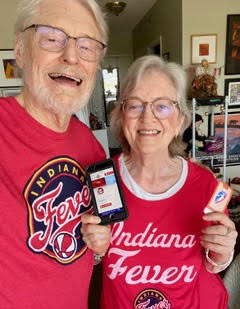
Yeah. So I didn't ask. I mean, I. When I asked you in the earlier podcast what brings you joy, I. I wouldn't have been surprised if one of you had talked about the Indiana Fever. We've got a photo of you that will be on the website. Tell us why you're interested. You live in Nashville.
Phil Amerson [00:14:39]:
Why are you interested in Indiana Fever?
Nelia Kimbrough [00:14:43]:
Oh, this all started a couple of years ago with the finals in college basketball. And we were with some friends, and it was Caitlin Clark's last time playing college basketball, and we got very involved with her and with what was going on. And then she ended up going to the Indiana Fever. And then a couple of these friends then continued to become great fans of Indiana Fever. And then this year, we all formed a little fandom club and committed ourselves to watching all the games. And then Nancy decided we all should have shirts and should wear them for all the games.
Phil Amerson [00:15:26]:
And.
Nelia Kimbrough [00:15:26]:
And so we did. And so, I mean, we listened in every format. She and two folks actually went to some real games, and when we could get them on our tv, we would, but we listened to them a lot on the radio. And then while we're doing that, we're texting back and forth with our other friends who are in Evansville and in Carmel and. And just. Anyway, we're into it big time. But the other thing that's been really important, but that is the development of the wnba, the importance of women's sports, and these amazing athletes that are coming forward and playing. So we've.
Nelia Kimbrough [00:16:05]:
We really have enjoyed them. And yeah, we got it bad. So.
Calvin Kimbrough [00:16:12]:
So. So the best thing, the thing I like so much is that one of the things that happens a lot in the NBA and it's. It's drifting down into college basketball now for men, is that everything is either this long batch of dribbling around and finally getting the shot or dunking the ball. And one of the things that I find really fun about watching the WNBA is that there's a lot more passing and there's a lot more teamwork and running and. And just keeping their eyes open and making interesting maneuvers with the basketball both when they have it and when they don't have it, so that they're getting open that. That I haven't seen. I mean, it just seems there's less and less of it in men's college basket and men's basketball Period. So that's one of the things I like.
Calvin Kimbrough [00:17:10]:
I mean, it's. It's. It's more of a. Of a community sport.
Phil Amerson [00:17:15]:
Yeah. Yeah. So we often ask our guests if there is some symbol, some object, something that they look to or think about, book, piece of pottery. I don't know what that. That helps them stay centered and focused. Do either of you have such things? I can't imagine you don't, being visual people. But tell me, is there something that. That helps center you?
Nelia Kimbrough [00:17:47]:
Well, for me, as I've thought about that question, it's really being able to work with my hands. So being able to make things through all my life, whether it's meals or art or put together costumes and clothing or set a table, working my hands is what keeps me going. And in really bad times, that's what keeps me sane, is making something working with my hands. So.
Phil Amerson [00:18:17]:
Wow.
Nelia Kimbrough [00:18:18]:
That. That's. That's what it is for me.
Calvin Kimbrough [00:18:22]:
And I would say. I would say for me that the connection between my eyes and my hands is what works for me. I. As you alluded to once, there was a period of time when we were in Evansville that I shot a lot of moving images and did video work that was really fun to do. And a lot of it, that was just industrial work. And one of the things that happened about that was that after a while, my knees just gave out. And so, because, I mean, the equipment that we used back then was all very heavy and. And awkward, rebalanced.
Calvin Kimbrough [00:19:10]:
I mean, people now just have no idea about that. But, but. But when I got to the Open Door, I got to start there. The Open Door was Catholic Worker Community took its image directly from the Catholic Worker. So it had a newspaper, and the newspaper was called Hospitality. And from the beginning, it had a newspaper. And I was asked shortly after I got there to begin to do the layout of the newspaper, which has been a wonderful thing to be involved in because I'm working with folks that are good writers and writing about really important stuff. And then turning that.
Calvin Kimbrough [00:19:58]:
Initially I turned it into a newspaper for, I don't know, 14 or 15 years. And then now we're only publishing online. So I got to redesign it for an online publication, which we're still doing. And it's one of those things that. That keeps me moving on because I have to keep looking for how to do graphics for these articles and how to. To put them on. Not on a page. Well, it's on a page, on a screen now, but I don't have to worry about trying to put it on a newspaper page.
Calvin Kimbrough [00:20:38]:
But you know, how you're gonna, how you're gonna present this material so that people can actually read it.
Phil Amerson [00:20:45]:
Yeah. Wow. I think, you know, I think we've only scratched the surface. Going to have to do this again in a few months. This has been wonderful time with Calvin and Neilia Kimbrough, who have offered great witness in their lives in so many ways in so many places. And so this is Phil Amerson saying goodbye for now for the Be and Do podcast. Give thought to where in your life you have a connection between what you see and how you use your hands or how you design something. These friends are wonderful teachers.
Phil Amerson [00:21:32]:
So thank you. Calvin and Neil YA Kimbrough.



