

Because: Rethinking the Ecology of Faith: Beyond Predator Christianity and Aquarium Boundaries
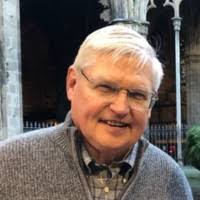






Welcome to another thoughtful episode of To Be and Do with Phil Amerson at the helm. In this inspiring installment, Phil invites us to reconsider the environments we nurture—not just the natural world, but the “ecology of faith” that shapes our spiritual and communal lives. Through personal anecdotes and keen observations, the discussion challenges us to rethink how we engage with differences within our faith communities and beyond.
Here are three key takeaways from the episode:
1. Rethinking the Church as an “Aquarium”Phil Amerson provocatively discusses how many perceive Christianity or church life as an “aquarium”—a closed system where “predator fish” consume the smaller, weaker members. He urges listeners to reject this “backward” approach, insisting that faith is intended to be expansive, welcoming, and interconnected. Citing John Wesley’s famous line, “The world is my parish,” Phil laments how this creed has sometimes been reversed, with people shrinking their worlds down to their local parishes and drawing too many boundaries.
2. The Lost Art of Community Conversations Reflecting on his upbringing in Indiana, Phil Amerson nostalgically recalls the rich, lively conversations that happened after church—in parking lots, over trivial debates about sports and ice cream, but also across political divides. These moments fostered a sense of belonging and openness, illustrating an “ecology” big enough to hold different perspectives without division or hostility.
3. Embracing Difference with Grace A major theme in this episode is the importance of engaging with those whom we disagree. Phil Amerson notes a troubling trend of “predator Christianity”—where difference leads to exclusion. Instead, he invites listeners to have open, gracious conversations with those of divergent views, full of welcome and laughter. He reminds us that “the earth is the Lord’s and the fullness thereof”—including people with whom we might never see eye to eye.
To Be and Do challenges listeners to pursue a larger, holistic faith community, where dialogue and difference are not threats but opportunities for growth. Take time this week to foster one of those open, respectful conversations with someone who sees the world differently than you do. As Phil Amerson says, maybe it’s time to bring back the laughter and curiosity that come with truly listening to one another.
God bless, and thanks for listening!
Phil Amerson [00:00:01]:
Welcome. This is Phil Emerson again, just because. Because I want you to think with me a bit about environments.
Philip Amerson [00:00:11]:
And rather than the natural environment, which is a topic we need to talk about, I want to talk about the ecology of faith.
Phil Amerson [00:00:22]:
And I want to talk about, as one person has said it, you know.
Philip Amerson [00:00:27]:
Too many treat the church or denominationalism or Christianity as if it's an aquarium where the big predator fish eat the small fish.
Phil Amerson [00:00:40]:
And that is about as backward a.
Philip Amerson [00:00:43]:
View of Christianity as there can be.
Phil Amerson [00:00:46]:
John Wesley said the whole world is.
Philip Amerson [00:00:49]:
My parish and he wasn't interested in kingdoms. I teasingly, a few years ago said, we've taken Wesley and Methodism and flipped it on his head. And instead of the world is my parish, we now think the parish is my world and my parish is the kingdom, and that's all that matters. No, no, no, no, no. We need one another.
Phil Amerson [00:01:15]:
One of the things I think has.
Philip Amerson [00:01:16]:
Disappeared in recent decades is what I knew growing up in southern and central Indiana, and that was those conversations that.
Philip Amerson [00:01:28]:
Happen in the parking lot after church.
Philip Amerson [00:01:32]:
And if you had any of the.
Phil Amerson [00:01:34]:
Experiences I had or if you didn't.
Philip Amerson [00:01:36]:
Know that generation, let me tell you.
Philip Amerson [00:01:38]:
That often in the parking lot after church, there would be great conversations about.
Philip Amerson [00:01:43]:
Which softball team was the best or.
Phil Amerson [00:01:47]:
Which ice cream shop was the best.
Philip Amerson [00:01:49]:
Place to go, or Republicans teasing Democrats and Democrats teasing Republicans. I can still hear jokes about Harry.
Philip Amerson [00:01:58]:
Truman and Dwight Eisenhower and John Kennedy and Barry Goldwater, but they went on.
Phil Amerson [00:02:06]:
The ecology was big enough.
Philip Amerson [00:02:09]:
The aquarium understood that there are many fish in God's ecology, in the environment.
Phil Amerson [00:02:19]:
We have now predator Christianity going on in some places where if I don't.
Philip Amerson [00:02:25]:
Like your theology or if I don't.
Philip Amerson [00:02:27]:
Like your social group of ideas, then I've got to have you done away with. Oh, it's all a part of individualistic Christianity. You know, the scriptures say the earth is the Lord's and the fullness thereof.
Phil Amerson [00:02:49]:
The fullness that would include people I disagree with, but pray about it, think about it.
Philip Amerson [00:02:59]:
And if you get a chance to have one of those, well, maybe not in a parking lot, but a conversation with somebody who doesn't quite, quite align.
Philip Amerson [00:03:08]:
With your point of view.
Phil Amerson [00:03:10]:
Maybe it's time you had one of those that was full of welcome and laughter and a willingness to listen to something that is different from what you believe.
Philip Amerson [00:03:24]:
God bless.
Phil Amerson [00:03:25]:
This is Phil Emerson, and I'm sharing this just because.
Philip Amerson [00:03:30]:
Because. God bless. Bye bye.


