Exploring the Roots and Evolution of Methodist Missions: with Philip Wingeier-Rayo
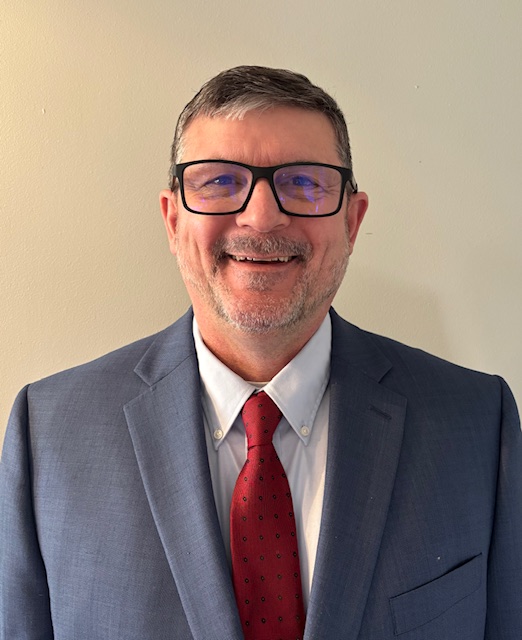
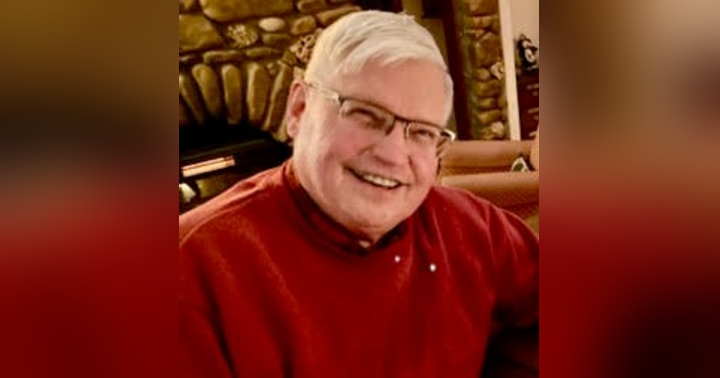
The latest episode of the "To Be and Do" podcast, hosted by Philip Amerson, dives deep into the fascinating history of Methodist missions with guest Philip Wingeier-Rayo , a scholar uniquely positioned at the intersection of missions, intercultural studies, and Methodist studies. Their discussion, grounded in Philip Wingeier-Rayo 's newly released book, offers an insightful look at the nuanced evolution of the Methodist missionary movement, its motivations, and its sometimes surprising global impact.
https://www.abingdonpress.com/product/9781791035167
Here are three key takeaways from this enlightening conversation:
1. The Origins of Methodist Missions Are Rooted in Complexity and Collaboration
One of the standout themes is that Methodist missions did not arise in a vacuum or purely from the inspiration of one man. Philip Wingeier-Rayo outlines how John Wesley, often credited as the father of Methodism, built upon the legacy and practices of earlier movements and individuals—including the Church of England, the Roman Catholic Church, and most notably, the Moravians. Wesley’s own mission trip to Georgia is described not as the origin story of a bold new missionary venture, but as a journey deeply influenced by existing societies such as the Society for the Promotion of Christian Knowledge and the Society for the Propagation of the Gospel. Wesley’s status as a missionary was even debated given he never accepted a salary and saw himself, first and foremost, as a reformer within the Anglican fold, not the founder of a new denomination.
2. Lay Participation and Experiential Faith Fueled the Spread of Methodism
The conversation underscores that much of the expansion of Methodism was not top-down but organic and lay-driven. Everyday Methodist believers who emigrated to new lands often started societies before any formal sending of clergy or missionaries. Their call for pastoral support pushed Wesley to act, albeit reluctantly at first. Equally important was the role of experiential faith—the so-called “religion of the heart”—which, influenced by Moravian Pietism, inspired laypeople with a passion that transcended mere intellectual assent. This blending of personal experience and communal action created a wildfire effect, allowing Methodism to take root in diverse contexts far beyond England.
3. Methodist Missions Evolved Through Global Partnerships and Educational Initiatives
Philip Wingeier-Rayo shares compelling stories, such as that of Boston King—a formerly enslaved man, Black Loyalist, and eventually the first Methodist to preach in Africa—whose journey displays the global reach and mutual interdependence of Methodist mission efforts. The Methodist and Evangelical United Brethren (EUB) traditions, he notes, eventually merged in 1968, creating a patchwork of autonomous mission churches worldwide. Philip Wingeier-Rayo points out that the EUB were often ahead in granting autonomy to local churches, breaking free from colonial structures. Furthermore, education was central: taking inspiration from the Moravians, Wesley’s model always paired faith with knowledge, ensuring a holistic approach to mission work.
In Conclusion:
This episode of "To Be and Do" not only educates us on the early Methodist mission movement’s origins and dilemmas but also links those historic insights with the present challenge of building truly global, autonomous, and mutually empowering Christian communities. For anyone interested in church history, missions, or the Methodist tradition, this episode is a must-listen, distilling big ideas into engaging stories and practical lessons.
https://www.abingdonpress.com/product/9781791035167
Philip Wingeier-Rayo serves as Executive Director of Education for the General Board of Higher Education & Ministry of the United Methodist Church. He is also Visiting Professor of Missiology, World Christianity, and Methodist Studies at Wesley, where he teaches courses in mission and evangelism, world Christianity, and Methodist history and doctrine. He served as Dean at Wesley from 2018-2022. Wingeier-Rayo was born in Singapore to missionary parents and grew up in Evanston, Illinois. He earned a double major in Human Relations and Spanish from Earlham College, a M.T.S. from Garrett-Evangelical Theological Seminary, and a M.Th. from Seminario Evangélico de Teología in Cuba before earning a Ph.D. in Theology, Ethics and Culture from Chicago Theological Seminary. His teaching and scholarship is informed by 15 years of missionary service where he served with the General Board of Global Ministries in Nicaragua, Cuba, Mexico and the Rio Grande Valley in south Texas. Wingeier-Rayo has published five books, including Where are the Poor? A Comparison of the Ecclesial Base Communities and Pentecostalism—A Case Study in Cuernavaca, Mexico (Pickwick Publications, 2011) and The Bible Through the Eyes of John Wesley (Upper Room/Discipleship Resources, 2019). His most recent publication is John Wesley and the Origins of Methodist Missions (Abingdon Press, 2025). Wingeier-Rayo and his wife, Diana, reside outside of Washington DC and have three adult children and one son-in-law.
Books:
John Wesley and the Origins of Methodist Missions, Nashville: Abingdon Press, 2025.
La Evangelización y la Misión de Dios: Una Teología Bíblica, Nashville, TN: Wesley’s Foundery Books.
2020.
La Biblia a través de los ojos de Juan Wesley: 52 clases de discipulado para pequeños grupos, with
foreword by Justo González, Nashville, TN: Upper Room, 2019.
Where are the Poor? A Comparison of the Ecclesial Base Communities and Pentecostalism—A Case
Study in Cuernavaca, Mexico, Eugene, OR: Pickwick Publications, 2011.
Cuban Methodism: The Untold Story of Survival and Revival, Atlanta, GA: Dolphins and Orchids,
2006.

Philip and Elaine Amerson live in Bloomington, Indiana where they enjoy work the multiple educational and cultural opportunities of the city. They each are active in several community activities from addressing issues of low-income housing, public safety, encouraging civic and faith community involvement.
Because Lent 2026: Reflections on Morality, Education, and Faith: Insights from "To Be and Do"