

Bridging Communities and Circles of Joy with Calvin and Nelia Kimbrough






Show Notes: To Be and Do
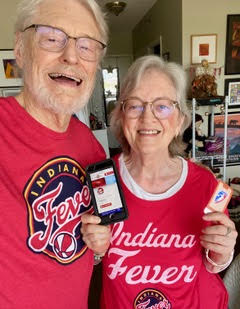
In this heartfelt episode of To Be and Do, Phil Amerson welcomes longtime friends and collaborators, Calvin Kimbrough and Nelia Kimbrough, for a reflective and inspiring conversation about a lifetime of ministry, community building, and joyful, radical hospitality. With decades of collective experience as educators, artists, activists, and spiritual leaders, the Kimbroughs share vibrant stories from their journeys in places like Nashville, Atlanta, and Evansville.
Listeners are treated to personal narratives that reveal how childhood experiences—like Nelia Kimbrough’s memories of a “hole in the hedge” connecting separate communities, and Calvin Kimbrough’s time with his grandfather in a segregated Nashville—formed a foundation for their lifelong commitment to bridging divides. The couple recounts how formative relationships and transformative experiences led them to co-found Patchwork Central and later join the Open Door Community, always centering their work on proximity to the marginalized.
Phil Amerson, himself a participant in this shared history, draws out reflections on legacy and the evolving work of Patchwork Central. The Kimbroughs express deep joy seeing a new generation, represented by Amy and John Rich, expand and reimagine the mission. The conversation highlights how vital it is to keep ministries open to renewal, always responding dynamically to changing needs.
Takeaways from the Episode:
- Bridging Divides: Whether through literal holes in hedges or inclusive worship services, true community is built by finding—then widening—connections between different groups. For the Kimbroughs, lasting joy comes from these small but transformative acts of bridging.
- Legacy and Adaptation: The Kimbroughs’ pride in Patchwork Central’s evolution, particularly the new initiatives after their leadership, underscores the importance of building institutions that outlast individuals and adapt to the times.
- Power of “Weak Ties” or Bridging Relationships: Communities flourish when they foster not only strong personal bonds but also many “bridging” relationships—expanding circles that renew and diversify participation.
- Learning from Proximity: Being close to suffering and need, as described in experiences at Open Door, is challenging but essential to authentic service. This proximity not only transforms those who serve but honors the dignity of those served.
- Supporting Evolving Work: The Kimbroughs encourage listeners to support organizations like Patchwork Central, reminding us all that lasting community work relies on ongoing engagement and generosity.
This episode is a beautiful testament to a life dedicated to weaving relationships and creating spaces of belonging—a must-listen for anyone interested in community, faith, and the art of making connections that endure.
Phil Amerson [00:00:01]:
Greetings again, everyone. This is Phil Amerson with the To Be and Do podcast. It's a place where we sort through what it means to belong to others and to belong to community. And I have been looking forward to visiting with these friends from the moment we found out we could find time to be together. This is Calvin and NeliaKimbrough. How do I introduce. I think of them as Renaissance people in the kingdom of God.
Calvin Kimbrough [00:00:32]:
They.
Phil Amerson [00:00:33]:
They are good troublemakers in John Lewis. Lewis's terms, but they have been, let's see, professors, administrators, artists, pastors, journalists, videographers, troublemakers, potter, photographer. It goes it, you know. Wow. And you're only 43 years old.
Calvin Kimbrough [00:01:00]:
Yeah. Right.
Phil Amerson [00:01:05]:
It is so good to see you and thank you for. For being willing to be with us today. Calvin and Neil, I first met almost 50 years ago, and maybe it was. I don't know. And we've traveled many roads together, and we've also traveled in and other places apart, but always had a great appreciation for their ministry, their vision, and remarkable work that they've done in. In. Well, in Atlanta, in Nashville, in Evansville. And what am I leaving out? Lots of places.
Phil Amerson [00:01:49]:
And so welcome, good friends. I realized I sent you a question, and it may have sounded like I was expecting you to die any moment. And that's not what I. I think I sent the question. Tell us briefly about yourself and the remarkable journey you have been on. But I didn't mean that this was the last mile of the journey. You've got many years to go, Right. Tell us a little about yourself and most importantly, what brings you joy? What have you learned that gives you joy?
Calvin Kimbrough [00:02:27]:
Do you want to go?
Nelia Kimbrough [00:02:29]:
Well, I grew up in Lawrenceburg, Tennessee. 5,000 people in the town, 43 miles above the Alabama state line. Cotton country. Grew up on a street that was where the white community met up with the African American community. And the two communities were separated by a big hedge. And the important thing was that there was a hole in the hedge and the children ran back and forth and played with each other. So that's been an image that has stuck with me all my life. There is the separation, but there's a hole and there's a way through.
Nelia Kimbrough [00:03:15]:
So then I went on to Tennessee Tech, mainly because it's where I'd gone to cheerleading camp. So there met Calvin, and there, through the good graces of a campus minister, managed to spend a summer in 1967 in the Soviet Union. So that was another major turn in my life. I went from being an accounting major to a history Major to try to find out why the world was like it was, and then went on to seminary. And there we met Phil and Elaine. And through long conversations of doing our laundry, over at Phil and Elaine's house came the vision of creating Patchwork Central. And There we went, 27 years for us. And then to the open door community in Atlanta, Catholic Worker House of Hospitality, and then here in retirement.
Nelia Kimbrough [00:04:14]:
So what brings me joy is relishing all of those memories of that work and now being at a place where there are young activists that are doing the work and finding ways in which we can be supportive of them in this very chaotic time.
Phil Amerson [00:04:36]:
Yeah, great.
Calvin Kimbrough [00:04:37]:
So one of the great experiences I had growing up was that my granddad was an IBEW electrician. And he was the electrician at Meharry Medical College and Hubbard Hospital. And I'm sure he was the electrician there because there were no black people in the IBEW local here in Nashville. And there was probably some requirement that there be an IBEW person that was the electrician around in various different institutions. And when I was young, I would get to go over sometimes and spend Friday night with them and go to work with him on Saturday morning, because he worked a half a day on Saturday morning. And we would wander all around that place and. And I met lots of doctors and nurses. You could tell they were doctors and nurses because they had on white coats and.
Calvin Kimbrough [00:05:41]:
And, you know, I never thought anything about it. I mean, doctors and nurses were pretty. In my life anyway, we were very respectful of doctors and nurses and. And they seemed to like my granddad, and my granddad seemed to like them, and it was great with me. And then in 1960, when the sit ins happened, I kind of began to put a lot of pieces together about what was going on in our society. And that was a big learning experience for me. Another big learning experience for me was when a United Methodist pastor named Bill Barnes came to Nashville and he. He really wanted to set up a ministry, a United Methodist ministry close to housing project.
Calvin Kimbrough [00:06:42]:
And so he came to. To a Methodist church that had been the Methodist church of my. The Kimbrough family. And it sat right in the middle of this huge housing project that had been built in the 50s, and it was a perfect location for him. But the church didn't want to do that kind of work and relate to the housing project that was around it. And the church was pretty much the community of the church had been pretty much wiped out by the interstate that came right by the front of the church. It was Carroll Street United Methodist Church here in Nashville. And after a few years the church went away and there was a vacant lot that became a small park, which was a very instructive visual for me about what happened when the church didn't really want to deal with the neighborhood.
Calvin Kimbrough [00:07:50]:
And then through learning a lot of history at Tennessee Tech, NIA and I decided we were going to go to Candler and, and the kind of, you know, we again, after, well, after we had graduated, we stayed on there and that's when Phil and the Lane came and. And we began to talk about a ministry in a city, but a medium sized city, not a big city. And there were all these routes for Phil Delane and John and Ruth there in Evansville and we moved to Evansville. And the whole notion of being in proximity with the poor has been for all of our adult lives, a part of what we've done. So that gives some history, I think.
Phil Amerson [00:08:54]:
And what brings you joy, Calvin?
Calvin Kimbrough [00:08:56]:
What brings me joy? Oh, yeah. Well, one of the things that's been just great for me is following the circles that happen. So here's like one. For 17 years of the time that we were in Evansville, we had Christmas Eve worship at our house at 11 o' clock on Christmas Eve. And the last time we did that was shortly before we left to go to the Open Door. And a woman who had grown up in the Patchwork community and who 17 years before had gone to sleep in her mother's lap during this service, had her child go to sleep in her lap. And I think it's those kinds of pieces of joy that are just incredible. One of the things that's been so wonderful about.
Calvin Kimbrough [00:10:01]:
You interviewed Amy and John Rich, who are now the folks that are the directors at Patchwork Central. And one of the great pieces has been going back there and meeting a child who was in the program, who now is very much an adult with children of their own and seeing those circles completed. There was a big celebration a few years ago of Patchwork Central being there. I think that was 40 years, wasn't it? And we were there on a Saturday for this big celebration and the room was full of people that we had known in various different stages over the 29 years we had been. We were at Patchwork and then we stayed during the week to do some visiting and then we came back on Thursday for the finishing program, for the children's program that was a summer program. And there was a whole room full of people that we didn't know and they didn't know us. And it just was a perfect circle of, of making around and coming back and seeing something that looked the same but was very different.
Phil Amerson [00:11:26]:
Wow. So much. I, I love the metaphors here. Doing laundry together, the hole in the hedge, wiring connections, circles of relationship that continue and surprise. Wow. Well, I'm not surprised. You both are remarkable storytellers in so many venues. You mentioned John and Amy Rich and people who have followed this podcast probably heard them recently as they shared about Patchwork.
Phil Amerson [00:12:02]:
Were you able to hear that those podcasts and, and did you learn anything new as you heard from John and Amy or just tell us about how you perceive that work today?
Calvin Kimbrough [00:12:18]:
You want to go first?
Nelia Kimbrough [00:12:20]:
One of the things I liked about their conversation was they talked about this notion of meandering ministry at Patchwork. And I think one of the important things about how Patchwork got started. You mentioned about one of our esteemed friends talking about Patchwork as a place where there are more ministries than there are people. I think that was pretty good thing to start with because we were very diverse and each of us wanted to do a particular kind of ministry. And so we worked on that and responded to many different needs in the neighborhood. And what's been impressive for me about Patrick since we left is how much they have both built upon what we all started, but how they also have allowed new things to bloom and take place that we never did. They now have a full blown shower ministry and we didn't do that this morning. Hospitality that they are hosting for folks is grows upon our notion of hospitality, but has opened it up to a much fuller range of ministry.
Nelia Kimbrough [00:13:39]:
So I'm very pleased with what's gone on there, very encouraged by it gives me a lot of hope for the future.
Calvin Kimbrough [00:13:51]:
One of the things I really enjoyed about your interview with them, well, a part of it was how specific John was able to be about how the new, the new killing of all of the programs from Washington D.C. is going to affect the neighborhood and in particular how that's going to affect health care in the neighborhood. And I just think having that kind of information out where people can hear it from straight from somebody who's going to be needing to deal with it now is really important. And I think both John and Amy bring a level of, of, of learning in their programs that they've done, you know, as degree programs, but also just in, in the kind of projects that they research to the program. I mean, and, and that was true when they were both just volunteers working at Patchwork. They, they brought understanding and new ideas that were very Helpful and, and good for the neighborhood.
Phil Amerson [00:15:21]:
Yeah, well, if, if the listener thinks that we're making a plug to support patchwork, we are. Give money and we'll provide the link. So you can do that. I want, I want to. You know me, I'm always reading social science stuff. Recently I came across an interesting new book. I think the title is. The Strength of Weak Ties.
Phil Amerson [00:15:57]:
And by that the author means that one of the dangers of, of churches or garden clubs or community groups is sometimes they become so insular that people only relate to those that are in the group. It seems to. And, and, and the argument is if they're. If you're in a neighborhood where there are many acquaintances and many ties, there can be renewal and growth, like Calvin was talking about a few minutes ago. And another researcher has said, well, we really ought to call those bridging relationships and not just, not just narrow or weak relationships. As I talk about the importance of bridging relationships, I think about patchwork and all that happened there to welcome others along the way. And so it didn't just become one insular group, but was always spinning. As Calvin was saying, there were always these circles.
Phil Amerson [00:17:12]:
Does that make any sense to you or is this just fill off on another sociological jag?
Nelia Kimbrough [00:17:21]:
No, I think that especially that notion of bridging and the understanding of bridging from an organization in a small organization in a poor and declining neighborhood, then bridging into the larger community where there are additional resources. And one story that comes to mind as you're talking about that was, and it involves Amy, is that years ago in the summer program, the children decided that they wanted to do a fashion show. And Amy said, okay, fine, we'll do it. The rest of us were like rolling our eyes and oh, wow. But in doing that, Amy lined up all of these events for the children. So we just. Which include writing about what they wanted to do with their fashion, going into Goodwill and being allowed to pick out anything they wanted to. And I was terrified, being afraid they would destroy the store, but they didn't.
Nelia Kimbrough [00:18:21]:
And then finding a woman who actually taught modeling, she came in and worked with the children. We designed a whole modeling Runway. Calvin set up a screen where they were photographed. We invited everybody to come and see the show, which was well attended, and the kids were great. And so in the midst of that, there were all these relationships built outside of this art program into the larger community. And the children then had this experience of being a part of the larger community and not just the environs of our downtown neighborhood.
Calvin Kimbrough [00:19:03]:
I would say one of the other, what came to my mind was walking out the front door at the open door community and on a rainy morning to give out tickets for either showers or for a meal, for the lunch meal and, and having somehow or another to come to some relationship with wet people who were hungry and, and, and myself who was dry and, and I.
Phil Amerson [00:19:50]:
Think.
Calvin Kimbrough [00:19:53]:
That'S the toughest train I've ever tried to bridge is just that encountering at 8 o' clock in the morning.
Phil Amerson [00:20:05]:
Yeah.
Calvin Kimbrough [00:20:05]:
You know, if we were, if we were in good shape in the house, we had rain jackets I could give out. They weren't much, but they were some protection, you know, and I was giving, you know, I was giving out tickets too, or taking names for showers, either of which was very helpful also for the people who wished to do that. And you know, and we had had coffee out in the yard and they could be drinking hot coffee and had been for an hour or so, but it's still just this huge, huge divide between what I had and what they had.
Phil Amerson [00:20:50]:
Right. Well, wonderful, wonderful reflections. And I'm aware that it's not just bridging with those around and, and you both have modeled that in so many ways, but it's also bridging toward the future. I, I, I think the church is going to need to learn these practices of, of new relationships, new ways to meet cold, hungry people and become a friend or let them be your friend. Learn from them. So this is Calvin and NeliaKimbrough for the Belonging Exchange where we focus on the importance of interdependence, on weaving new connections. And next time we talk with Calvin and Neil, you will talk more about art and maybe a little bit about what, what they're seeing for the future. So God bless.
Phil Amerson [00:21:58]:
This is Phil Amerson for the Belonging Exchange.


