

ICE, Free Speech, and Immigrant Rights: Christie Popp Discusses Today’s Critical Issues
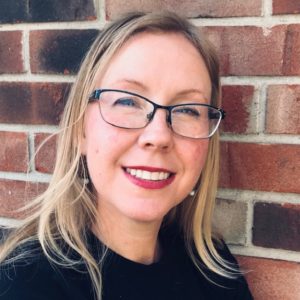


In this timely and candid episode of the To Be and Do podcast, host Philip Amerson sits down with immigration attorney Christie Popp to unpack the evolving—and often alarming—landscape of asylum and immigration policy in the U.S. today. Christie Popp, a founding attorney at Popp and Bullman in Bloomington, Indiana, offers a rare, ground-level view into the lives affected by shifting regulations, political pressure, and the consequences of silence in times of injustice.
The episode dives headlong into the unsettling reality of frequent immigration law changes. Christie Popp points out that nearly 600 modifications to the immigration system have occurred in just over a year, particularly impacting asylum seekers and immigration courts. She highlights how these changes, rarely covered in-depth by mainstream media, are shifting the "rules of the game" even as vulnerable individuals' cases are pending, creating both logistical hurdles and a culture of fear.
A significant portion of the conversation centers on the particular struggles of Afghans, many of whom were allies to U.S. forces and entered the country through both formal and perilous, unofficial routes. Christie Popp details how these individuals—once celebrated—are now viewed with suspicion. Their cases, along with others, are subject to delays and retroactive review, subjecting them to potential loss of status and deportation on tenuous grounds—often for actions they had no real choice but to take.
The discussion broadens to address the chilling effect these policies have on free speech and public protest, especially among immigrants, academics, and their allies. The fear of being detained or targeted for voicing dissent is stifling civic engagement, even among those who are U.S. citizens. Both Philip Amerson and Christie Popp reflect on why these authoritarian patterns haven't sparked more outcry from the public and government leaders.
Despite the weighty subject matter, Christie Popp offers ways to take meaningful action—supporting local organizations, contacting representatives, and lending both time and resources are all encouraged. She also shares her personal strategies for maintaining resilience and hope in such difficult work.
Key Takeaways:
- Constantly Shifting Laws: The immigration system is changing at an unprecedented pace, making asylum increasingly inaccessible and causing confusion for both immigrants and advocates.
- Afghan Allies at Risk: Many Afghan asylum seekers, previously welcomed as allies, now face suspicion, paused applications, and retrospective investigations that could result in deportation.
- Chilling Effect on Free Speech: Fear of detention or deportation is silencing many immigrants and their allies, undermining not only immigrant rights but also America's broader democratic ideals.
- How to Help: Local and national organizations need support more than ever, and individual advocacy—through donations, volunteering, or political engagement—can have a significant impact.
- Staying Resilient:
- Christie Popp
- emphasizes the importance of self-care and community, encouraging listeners to seek sources of hope and to care for themselves as they work for justice.
This episode is a vital listen for anyone concerned about the state of immigration, human rights, and democracy in the United States.
Philip Amerson [00:00:02]:
We welcome you back to the To Be and Do podcast. This is Phil Amerson, and we're continuing our conversation with Christy Popp. She is one of the founding attorneys for Popp and Bullman here in Bloomington, Indiana. And Christy, you gave us an introductory course, but I know We only scratched the surface of that. What comes to mind right now that I think would be helpful for people to know more about is the situation around asylum. And I'm thinking particularly of what's been happening to Afghanis. I know there was an— is an Afghani person here in Bloomington that has been detained. But also Somalis and others who, for humanitarian reasons, were welcomed into this country.
Philip Amerson [00:01:02]:
Talk a little bit about, and I know the asylum programs are shifting dramatically and judges are being changed and that sort of thing. Bring us up to date around that whole question of asylum.
Christie Popp [00:01:16]:
Sure. I would start by saying that over the, since January 20th of last year, we've seen nearly 600 changes in the immigration system. It's been a lot, and most of those, many of those have been specifically related to asylum and the immigration courts. The immigration law is an administrative law, so a lot of our laws come from the statute, the regulations the agency promulgates, and then informal policy that the agency also uses. And then we have what's called the Board of Immigration Appeals, which is the first level appellate body. So over the course of this year, all of those things have been changing except for the statute and the regulations, the things that are difficult to change, right? The things that you have to go through a notice and comment period, but everything else has been changing. And just this week, I think the Board of Immigration Appeals has issued 5 precedential decisions. But over the course of this year, they are getting close to 50 or 60 new cases, most of which are in favor of the government and many of which are asylum-specific.
Christie Popp [00:02:23]:
So they're changing the rules of the game while our clients are playing the game. The asylum process has always been very difficult. I think a lot of anti-immigration people talk about asylum as an easy route for fraud. And I'm not going to say that there's never been people who've committed fraud in asylum. Of course, Of course, there's fraud everywhere, but it's not— it is such a difficult thing to prove asylum. It's not like everyone is committing fraud to get asylum. People come here to the United States and apply for asylum because they have a deep fear of being harmed or killed in their home country. And it has to be on account of one of 5 factors: their political opinion, their religion, their national origin, their race, or because they're a member of a particular social group.
Christie Popp [00:03:11]:
Now this year we've seen some changes. I mean, that's what the law says. So they haven't changed that, but we're seeing changes kind of around the edges in different ways that the administration can make asylum more difficult. One of the big changes we've seen is in the immigration courts. In the immigration courts, the administration this year has been purging judges almost on a biweekly basis. They have been firing judges who have too high of an asylum grant rate. So now the judges that are there, even if they would want to grant asylum, they're a little afraid to because they know that they could lose their job if they have too high of an asylum grant rate. So a lot of the judges that are left have low single-digit to low 20% asylum grant rates, whereas before it would be closer to 50 or 60 for a lot of these judges.
Christie Popp [00:04:06]:
The Trump administration has fired judges and now replaced them with JAG, so military judges who have no training in immigration except for a brief course that they do before taking the bench. So that's one of the first changes.
Philip Amerson [00:04:22]:
Let's talk about who these people are in terms of their experience. Are they newly arrived in the country or have many or most of them been here for a while?
Christie Popp [00:04:36]:
So to get asylum, you have to apply within 1 year of arriving in the United States. Now, there is a huge backlog of cases. So there are some people who've been here for 8, 9, 10 years waiting for an interview for their asylum case. But as a general rule, you have to apply pretty quickly after getting here. And so most people do apply relatively quickly. For the Afghans, most of them have come since August 2021. And they are— many of the Afghans who applied for asylum were invited here as part of Operation Allies Welcome, which was a program that our government created to bring our allies over here. Um, ones that didn't get out in time with the parole program, uh, eventually made their way to the United States by going, say, to Brazil and then walking up Central America into Mexico, and then they came here and asked for asylum.
Christie Popp [00:05:32]:
I've had clients that were military, were in the military fighting for, with American forces, and they, they had to come up that way and apply for asylum. Now, all of those cases are on hold. Now, all Afghans are somehow suspect, despite the fact that they were our allies and helped us for many years.
Philip Amerson [00:05:57]:
So many of the same people who were saying we should be welcoming all of these Afghanis that supported us and how terrible it is that we didn't do a better job of welcoming those people, many of those same voices are now saying, why are they in this country and aren't they a threat to us? Am I right?
Christie Popp [00:06:21]:
That's exactly right. That's exactly what's going on right now. So all of the asylum cases, period, now are paused. So all asylum cases with the Immigration Service are paused, not just for Afghan, not, not just for the Afghan asylum cases, but all cases for people from Afghanistan are now paused, whether they were applying for a green card through marriage or whether they already have asylum. And the government is going back and looking at the grants for those cases, whether it was a citizenship or whether it was a green card or asylum, and making sure there wasn't— that they haven't committed a crime or participated in terrorism. Now, I want to add one point here. I said earlier that the Board of Immigration Appeals has been changing the rules. The Board of Immigration Appeals is part of the Department of Justice and comes with the Attorney General.
Christie Popp [00:07:11]:
So the Attorney General has a special role in immigration. Where he or she can kind of issue their own opinions like they're an appellate body. And we got, we had a great one this year, saying that sarcastically. Um, they, the Attorney General issued a decision that said that, uh, there is no duress exception to the persecutor bar. So if somebody was forced to engage in persecution because they were going to die or their children had a gun to their head, that is not, that is not, there's no exception to that. And you can't get asylum if you have persecuted someone. So I imagine that a lot of these Afghan cases, they're going back and looking at these cases of people from Afghanistan to see, among other things, if they might have even under duress assisted in the Taliban in something. Now, I don't know that for sure, but I think that's one of the things that they're looking at.
Christie Popp [00:08:11]:
They changed the rules now. So they can go back and take away the benefits.
Philip Amerson [00:08:16]:
So there have been news stories recently about even going after people who, well, even DACA folks. Am I right, or is that a myth?
Christie Popp [00:08:32]:
We have seen some individuals with DACA be detained. There's not— DACA is the one area where the Trump administration has not been as aggressive at ending the status or trying to detain people. DACA, though, is a form of what we call deferred action, and it is a protection against deportation. It is not protection against detention. And so the— we have seen cases of DACA activists or DACA individuals who are in places where ICE is conducting enforcement operations who have been detained because they're not protected from being put into jail for being an immigrant.
Philip Amerson [00:09:14]:
I want to test a larger theory that I have. And the theory is that in the West, especially in the United States, well, Great Britain and much of Europe, there is already a lot of multicultural linkage. That's happened. And in the United States, I'm noticing the reality that, and of course, especially I see it in university towns, the reality of persons who maybe have family members or close friend connections or academic connections with persons who are here on a temporary status. And the theory isn't that they are frightened for their friend or their family member. It's also that everything is dumbed down or calmed down or quieted down that persons, for instance, who may have a spouse from choose the country and maybe in a place where they could have influence to speak, no better than to do that because they could well lose a family member or lose a friend or lose an important academic colleague. I mean, we're seeing that across the country where academic folks are being deported. Am I right in that? Do you think there's a quieting, a subduing of what otherwise would be appropriate protest?
Christie Popp [00:11:08]:
100%, that is happening. If we're talking about in academia especially, we saw earlier this year, one of the first groups that was attacked by the Trump administration were academics. And foreign students, people that had been speaking out. And so very quickly, a lot of immigrants, their families, their allies realized that the First Amendment protections weren't going to stop their loved ones or their, their close colleagues from being detained. So I have seen that among my own, my own clients, that there is this deep, deep-seated fear of something that's going to happen. And people who might otherwise in the past been very active, very vocal, very engaged in the civic life of our country, which is an important foundation of our country, no longer feel that they can do that, even if they're U.S. citizens. And that— I get that question all the time.
Christie Popp [00:12:04]:
Will my wife be affected because I attended this protest? Will my wife be affected because I posted this on social media? And I can't say No, I, I mean, I, I can say that everyone has a First Amendment right to say what they want, but we've seen the Trump administration attack people for their speech, especially immigrants. And it's not to say that people won't prevail in the end, but the judicial system is very slow in having a remedy. It's not preventative at all. So people are harmed before they can get remedies.
Philip Amerson [00:12:42]:
So here is a tender topic since we're on tender topics. I understand that folks are in danger of being investigated or even deported if they speak against US policies publicly, whether it's the policy around Venezuela or more particularly, the relationship with Israel and the whole situation in Gaza. Am I right? Do people— is there a guarded sense that I've got to be careful not to have, well, let's call it the freedom of speech?
Christie Popp [00:13:23]:
Absolutely. Yes. And I, when I meet with a new client, I ask them about all of their recent speech, what they've posted on social media, what they've said out loud, because now that's a real concern.
Philip Amerson [00:13:37]:
So the deeper question for me sometimes becomes how much can the Second and Fourth Amendments and others be attacked and there's not a response from Congress or from the media or from the wider public?
Christie Popp [00:13:58]:
How much can they be attacked and there's no response? That's That's a very good question. I, I don't know. I have spent this year almost dumbfounded by the silence of people in our country and our government officials watching the Trump administration use the Department of Homeland Security as really a way to break down the Constitution. ICE is a paramilitary force. Now the Trump administration is arresting people for their speech. I don't understand why the government officials are not speaking out about this. And the only thing you can think of is that it's because it's the them. It's, it's like that famous poem, um, post-World War II, you know, first they came for the socialist, but I was not a socialist, that one.
Christie Popp [00:14:47]:
Um, it's the same idea. Well, it's, it's them. They're other. They're brown. They're immigrants. They're Muslim, whatever the case might be, they're not me. And so since they're not coming from me, I still have my freedom of speech. I still have this right.
Christie Popp [00:15:02]:
But the problem is we know that that gets degraded over time.
Philip Amerson [00:15:05]:
Yeah. So there's so much more, but we're running short on time. Just two things. If people want to be engaged in positive ways, do you have suggestions as to who they might support or where they might offer either financial or volunteer service?
Christie Popp [00:15:26]:
Yes. I think now more than ever, the basic act of contacting and, well, really harassing your congressional officials about what's going on and you're being horrified by that is really important. But a lot of the nonprofits that work with immigrants have been funded by grants from the federal government and from the state government, and those grants are drying up. So donating is very important. There are many organizations here in Indiana that work with those, work with those communities like Exodus Refugee, the Indiana Legal Services, the National Immigrant Justice Project, which is, I mean, Justice Center, sorry, which is out of Chicago, but they have offices here in Indiana. They do excellent work. So all of those organizations are really working hard. And here in Bloomington, El Centro Comunal Latino and the Bloomington Refugee Support Network, those are both groups that work directly with immigrants in our community.
Christie Popp [00:16:31]:
So helping any of those would be certainly beneficial.
Philip Amerson [00:16:35]:
So we started in the last episode learning about you. I want to end today asking, I mean, This is a heavy lift you're involved with. Lots of, I imagine, lots of disappointment and challenges and having to figure out new ways to proceed. So where do you find hope and where do you find joy? And are there any touchstones for you that sort of keep you going day to day?
Christie Popp [00:17:11]:
Yeah, that's a good question. This has been, uh, probably the hardest year I've— can— I mean, definitely in my career, but just in general, it's, it's been really, really hard. Um, so I think about this often, uh, among my immigration lawyer colleagues. They certainly— the idea, the discussion revolves around burnout and the stress and trauma. I think for me, I find going out into nature is really the only thing that is helpful for me, moving my body, going for hikes, and really just kind of taking care of that side of me is the most important thing. I find if I don't get outside and run or hike or exercise in some way, I start to go crazy. So that I try to prioritize that.
Philip Amerson [00:17:57]:
That's terrific. Yeah. With that, I'm going to figure out how to take a hike this afternoon.
Christie Popp [00:18:04]:
Good for you.
Philip Amerson [00:18:06]:
Christy Popp, who works in the field of immigration and is so knowledgeable. I encourage you to check out other resources, and as you have friends or relatives or others who need assistance, I would encourage you to be in touch with her office to see if if she or someone else can be of help. Thank you so much, Christy. This is Phil Amerson for The Belonging Exchange.


