

Stories, Songs, and Stones: Ed Kilbourne on Faith, Laughter, and Spiritual Change
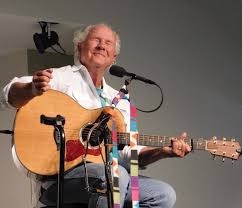






In this heartfelt episode of the To Be and Do podcast, host Philip Amerson welcomes the legendary singer, storyteller, and folk theologian Ed Kilbourne for a warm and candid conversation. With over 9,000 performances to his name, Ed Kilbourne brings a lifetime of humor, insight, and experience to the table. Together, they reminisce about decades of friendship, reflect on the evolution of faith and church culture, and discuss what authentic worship and community can look like today.
Three Takeaways from the Episode:
1. The Evolution and Future of Church CommunityEd Kilbourne and Philip Amerson explore how church culture has changed dramatically over the past 50 years. They discuss the rise of performance-driven “temporary worship” and the shifting patterns of congregational life, from grand productions to smaller, more authentic gatherings. Ed Kilbourne shares his own journey from leading thousands to finding spiritual depth in an intimate, three-person communion with no formal liturgy—champagne and donut holes included. Their conversation honestly addresses both the decline of institutional religion and the emergence of new, organic expressions of faith.
2. Rethinking and Renewing Faith Traditions The duo reflects on how religious practices are often maintained out of habit, likening the rote recital of creeds to the mysterious traditions of an Elks Club. Ed Kilbourne recounts a story from theologian Marcus Borg, who humorously admits to participating in church rituals “just because that’s what you do.” This sparks a broader conversation about the importance of seeking real meaning behind religious acts and finding new ways to make faith relevant and transformative in today’s complex world.
3. The Power of Storytelling and Song in Spiritual Life Music and storytelling remain at the heart of Ed Kilbourne’s ministry. In a moving segment, he performs a song about hope, waiting, and the eventual lifting of burdens—a piece that may not be explicitly labeled as “sacred,” yet clearly carries spiritual depth. Both speakers agree that the most profound truths often emerge from outside traditional religious genres, and they emphasize the value of honest, creative expression as a path to connection and healing.
Whether you’re nostalgic for the church of your youth or seeking fresh ways to experience and express faith, this episode offers wisdom, laughter, and a gentle nudge toward authenticity on the path of “being” and “doing.”
Philip Amerson [00:00:02]:
Greetings, everyone. It's Phil Amersonagain with the To Be and Do podcast. And today I've. I'm going to be having the privilege of speaking with one of my oldest. No, that's not the way I should say it. One of my friends for a long time, Ed Kilbourne, who singer, storyteller, humorous folk theologian. He's been called cross between Garrison Keiller, Jimmy Buffett and George Beverly shea. He's done 9,000 plus gigs since 1964.
Philip Amerson [00:00:41]:
That's about the time we met Gilbert. 3,000 in the pulpit, 6,000 concert. But this, I understand, is your first podcast.
Ed Kilbourne [00:00:51]:
Absolutely. Yes, it is.
Philip Amerson [00:00:54]:
Well, it's been nice visiting with you.
Ed Kilbourne [00:00:55]:
Yeah, thank you.
Philip Amerson [00:01:00]:
First, folks who don't know.
Ed Kilbourne [00:01:06]:
Ed and.
Philip Amerson [00:01:06]:
I have traveled many paths together and many paths apart. He's married to a wonderful woman, Kathleen. And how many grandkids do you guys have?
Ed Kilbourne [00:01:18]:
We have six grandchildren, three daughters and their families and six grandchildren spread around the country.
Philip Amerson [00:01:27]:
He lives in Minnesota Key, for those of you that know that part of Florida, somewhere there, south of Sarasota, I.
Ed Kilbourne [00:01:36]:
Think, and on a barrier island just off the coast. You've been here?
Philip Amerson [00:01:43]:
That's right.
Ed Kilbourne [00:01:45]:
If you ever wanted to live on a tropical island, that's where we are also ground zero for all kinds of. All kinds of both political and meteorological mayhem.
Philip Amerson [00:01:58]:
Lucky man. Always in the center there. Well, Ed, Ed, I've known Ed over the years doing concerts and workshops and just a wonderful, wonderful, wise man who causes many of us to rethink the way the world might be and to laugh along the way. He stopped doing regular bookings in churches in 2015, but since that, you've done a lot of, well, a few hundred three or four day events for people my age.
Ed Kilbourne [00:02:37]:
That's it.
Philip Amerson [00:02:38]:
Or vacation church, school for seniors.
Ed Kilbourne [00:02:41]:
Fastest growing demographic in the country. Might as well go where the action is. Yeah, yeah.
Philip Amerson [00:02:49]:
And many some. Some of our listeners I know are Episcopalian, so they might know Shrine Mount Conference center, where you've been there for 37 years. Every year.
Ed Kilbourne [00:03:01]:
I think this year was my 38th. As starts. Just started off with about 20 or 30 people meeting in a circle and I brought a little music. And then as they started to grow, I kept being invited back. They Episcopalians don't have a real deep, real deep bench when it comes to bringing in the kind of thing that I do. So they just kept sticking with me as a theme interpreter and so on. And then they'd hire each year somebody important and wise to be the presenter and then I'd kind of try to build my stuff around them, my songs and my stories and try to make them look good. And they made me look good.
Ed Kilbourne [00:03:47]:
And over the years it has grown to be. Well, they say it's the largest Episcopal senior adult event in the country. And they say that because it is the only senior. They don't have a whole lot. I don't know why they've got a lot of Episcopal senior adults. But anyway, it's grown and grown in reputation and now we can pretty well call up anybody and they show up and, and do our plenaries. As, as I think I mentioned to somebody, I just, just came back from being Marianne Buddy's sidekick, a woman of, of some notoriety. Now I discovered her on MSNBC being, being incarcerated or whatever she was being threatened with by Donald Trump for, for having the, the nerve to speak truth to power or at least gospel to power.
Ed Kilbourne [00:04:43]:
Anyway, she turns out to be a very slight, short quote, quiet woman. I don't know how she caused as much trouble as she did, but a brilliant, brilliant woman. So Bishop Buddy was this year's. But over the years I've been with many. In fact, I brought a picture here you. I don't even know whether you can see this. See if anybody knows who that is. Do you see this person? Right, well, let's see if we can get him.
Ed Kilbourne [00:05:11]:
You see that person right there? Anybody? Anybody recognize Marcus Borg?
Philip Amerson [00:05:20]:
I do recognize Marcus Borg.
Ed Kilbourne [00:05:23]:
That, that event that was just probably a year prior to his passing. Change really changed my life. I mean, I found Jesus as my personal savior and Phil knows that. Over the years I've been looking hard, I've gone forward, I've stood up, I've raised my hand, I've done everything that I could. But Marcus in one four day period shown the light and lifted my heart. And so it's been, it's been a transforming event for me. It's just once a year at the end of October, but it was, it's been cool.
Philip Amerson [00:06:03]:
Well, those Lutherans will do that to you. You know though. Discopalian reel you in. Well, Mark, isn't Marcus Lutheran?
Ed Kilbourne [00:06:12]:
No, he's a pain. His wife was a priest and he's.
Philip Amerson [00:06:15]:
Oh, okay.
Ed Kilbourne [00:06:17]:
Although he got a good story, Marcus was opened this floor to questions after each of his presentations. And there were some people there that came with, they came with their guns loaded. They were gonna, they were gonna try to nail him to the wall. They said, Marcus, we've heard all these things that you don't believe. You know, you, you've been on The Jesus seminar thing, and you've deconstructed just about everything that's sacred. And, and. But you go to church. He says, yes, I do.
Ed Kilbourne [00:06:52]:
He says, my wife is priest, I'm Episcopalian. Well, if you're Episcopalian, you've got. You've got to stand up in church or whatever you do and say the creeds. How can you, with all of you that you've professed and confessed here, still get up and profess the creeds? He said, well, let me tell you a story. I was doing a retreat, and after hours, we decided to go out and see if there's some place still open late at night. And we roamed around in this little town and found an Elks club, me and two or three leaders. We go into an Elks Club. And so we're sitting around there and at 11 o', clock, somebody hit a chime behind the bar and the whole club got quiet.
Ed Kilbourne [00:07:43]:
People put their drinks down and they. And they rang this chime I don't know how many times. He said, they rang this chime. And then everybody slowly lifted their hand. I don't know whether you can see me. Yeah, lifted their hands to their head and did this. And then soon after that, people picked up their drinks, the conversation started, everything went back to normal. So these three outsiders decided to find out what, what was going on there.
Ed Kilbourne [00:08:18]:
And so they asked, they asked. The bartender says, he says, oh, well, this is an Elves club. And every Elks club, every Elks club around the country, at 11 o' clock we ring a tribe and everybody does this. And Marcus or somebody in the of the three asked, why? Why do you do that? And the bartender says, to tell you the truth, I have no idea. We always do it. We've always done it. And that's just what you do if you're an Elk. So Marcus took a long pause, faced the audience and said, so when they have the creeds in our services, when it comes time for the creed, I very cautiously and kind of sneak my hands up on either side of my head and go like this, because that's just what you do if you're an Episcopalian, you.
Ed Kilbourne [00:09:22]:
You do whatever you do. It does. And it's kind of funny to see a distinguished scholar up there going like this to people. You know, I, I guess it's an elk's horns, but so it is. So it is. Every once in a while you go through the motions just because you've always been doing it. And I'm still willing to do that. But on A podcast.
Ed Kilbourne [00:09:48]:
I guess you probably want to find out what's really going on, not just what people. What kind of show people put on, but that's been my job most of my life, is putting on a show.
Philip Amerson [00:10:01]:
So I think we've talked before. Ed, I told you about the fellow who was asked if he went to church, and he said no. And they said, well, which denomination would you choose if you did? And he said, oh, you know, I. I think the Episcopalians. And when asked why, he said, well, you know, I like their lethargy. And. I've come to appreciate lethargy more and more in the church, especially as I nap on Sunday mornings. What's your sense of what's happening to faith traditions in this world? You see a lot of folks in many places.
Philip Amerson [00:10:50]:
Any hunches about where we'll be 10 years from now?
Ed Kilbourne [00:10:53]:
Oh, my, oh, my. Considering where we've been the last 50 years or so, it's no stretch of the imagination to say anything could happen. I never cease to be surprised and amazed on many fronts, but on what the church is and what it's doing and the church culture, so to speak, where we will be. I wrote a piece some years back called Please hold you'd APPLAUSE it was a critique of the emerging of what they called contemporary worship, which I have. I usually. Well, I don't usually. I always call it temporary worship. It's a form of worship on its way somewhere, but they have not gotten there yet.
Ed Kilbourne [00:11:44]:
So I just. I think temporary. Temporary is a good name for it. So temporary worship was emerging, and I thought, you know, where that really started. I think it started in Indiana, because people will applaud anything up there, particularly if a bunch of children get up and do anything. You applaud.
Philip Amerson [00:12:08]:
Right. And.
Ed Kilbourne [00:12:09]:
And up. The church you and I grew up on, grew up in, we didn't even. We didn't even have much audience participation in the way of amens, although on occasion there would be a sign, amen, you know, nothing too loud. But once. Applause. Once applause came in. And as a performer and as an artist, that's done a lot of being up in front of people who bought it. What it does, both to the audience, what it does to the people up on stage, is it makes them aware of their ability to perform.
Ed Kilbourne [00:12:44]:
And that started to become more and more of what worship evolved to. So I would say over the past few years that the performance aspects have become the. Have become the primary ingredients, particularly music and then charismatic speaking and so on and so forth. And I would expect in the next 10 years that I'm going to say that's maybe even already running its courses. There are a lot of these big box places and big, big shows that used to be on that come and go that are just as empty as an old Kmart. You know, that's right. People. People come and they.
Ed Kilbourne [00:13:26]:
They just. They come and then they go to the next church down the way. Another church opens up and a whole big congregation, sometimes thousands of people, just move on down the street to the next. To the next thing. And after a while, that kind of wears out. So, you know, that's.
Philip Amerson [00:13:40]:
That's in some ways related to this podcast title. It's not just to be, it's also to do. And we talked about this in a recent podcast. Neil Postman, years ago wrote a book called Entertaining Ourselves to Death, and I think he was on to what's happened to the church. Here's the irony. I think Christendom is over. The kind of church world that we knew growing up, yeah, it's disappeared. And there are lots of folks that have written about that.
Philip Amerson [00:14:20]:
But I. There's something else happening right now. I go to a lot of progressive churches, and they're rotten with children running everywhere, and they're active in various. Well, Elaine and I worshiped this past weekend in a church that's very busy priority, protesting the detention of persons in Chicago. And they can make a phone call and a dozen or 15 vans will pull up by the school where ICE is outside to pick up the families and the kids to take them to safety. That's the church, in my view. And there's a whole lot of that going on that wasn't going on 10 years ago.
Ed Kilbourne [00:15:07]:
Evidently, you can't see the south from where you're sitting, Phil, because that ain't happening down here.
Philip Amerson [00:15:17]:
Not in Atlanta.
Ed Kilbourne [00:15:18]:
Maybe in a few churches in Atlanta, in my former church in Atlanta. But yes, as often happens, the major cities are not a reflection of what's happening. Whenever you watch these election maps and you see a whole state red with a little dot of blue in the middle, that's what's happening. There's that little dot. There's that little spot, you know, and you'll have a Raleigh, and you'll have an Atlanta, and you'll have. You'll have Columbia and South Carolina, whatever, but. And that is, that is. That is very hopeful.
Ed Kilbourne [00:15:56]:
I myself haven't been to church since the beginning of COVID I have led in churches, but when I lead, you can't ask me what's going on in the church because I don't know what they're doing when I'm not there for the most part. But I have. Kathleen and I have the privilege in senior adulthood of if we don't want to do it, we don't do it anymore. We found a retired UCC pastor. Well, he was our pastor and then he retired and the three of us got together at his house one day to have communion and just talk. And that's been our church for seven or eight years now.
Philip Amerson [00:16:39]:
Yeah, you and several million others in this country, I think, have that kind of church.
Ed Kilbourne [00:16:47]:
We do the sacrament and we meet every two weeks. That's about it. We have no liturgy as such. We pass the lectionary around and do a Quaker style question. Does anything speak to you? And of course, all three of us, Kathleen's a United Methodist deacon and I have been a speaker and a teacher for a long time. And this pastor of ours is a scholar of some note. And we always have something to say. So we end up talking for sometimes two hours and crying and confessing and doing all those things just as a matter of flow, but not as a matter of ordered, intentional liturgy.
Ed Kilbourne [00:17:29]:
It just comes out because evidently this desire to worship and to connect is not something that's programmed by an institution. It's something we have in us. And if you get people together that have that appetite every once in a while now we do whet that appetite, our communion. We do it because Kathleen instituted it the first time with champagne and some donut holes that became our communion. And after two, but after two bottles of champagne, we're a Pentecostal church. Thank you, Jesus. It's kind of. It's kind of interesting.
Ed Kilbourne [00:18:15]:
Interesting thing. We often pointed out, you know, that the. The words of institution for our Eucharist ritual were given under the influence of alcohol. You cannot get away from the fact that they'd had several glasses of wine. Now, Bill, I've known you long enough to see what you're like after several glasses of wine and you've seen me under the influence. We got these. What's that?
Philip Amerson [00:18:45]:
I've seen you under the influence, but maybe not of wine.
Ed Kilbourne [00:18:49]:
We got these dudes sitting around trying to say the things that really matter to them and say goodbye to each other or ask questions and they're slightly inebriated. Surely one of them is going to say, I love you so much. I'm never gonna. I'm never going to turn my back on you. You're my favorite person. And I don't Trust that bastard down there at the end of the table. Look at. Look at the look in his eye.
Ed Kilbourne [00:19:12]:
Can you imagine what they might have been like? Anyway, I. I kind of enjoy imagining what they might have been like. So.
Philip Amerson [00:19:21]:
So I. You used to sing a song. It must have been a different Jesus.
Ed Kilbourne [00:19:28]:
I know.
Philip Amerson [00:19:29]:
Yeah.
Ed Kilbourne [00:19:29]:
It keeps coming up. It keeps coming. Does it? Yeah. Like.
Philip Amerson [00:19:34]:
Like a bad meal.
Ed Kilbourne [00:19:36]:
Yeah. Yeah.
Philip Amerson [00:19:38]:
So what kind of. What sort of things do you sing today, man?
Ed Kilbourne [00:19:44]:
I'm glad you asked because I came across a tune that I used at the shrine month this year. It's a short little piece and it's not a God. It's. It's not religiously oriented as. As we say, it's not a sacred song. In fact, I hardly. Of what they call commercial Christian music or sacred music, I find the best writings being done and performed by. By artists outside the fold.
Ed Kilbourne [00:20:10]:
And I did not know these people. I literally was scrolling YouTube and found this tune by Kyrian Cain and Kevin Welch. And it was so simple and so pure. That I just had to learn it and teach it to my friends up there in Virginia.
Ed Kilbourne [00:20:44]:
Someday we'll roll away the stone we have carried for so long all our burdens will be gone I can't wait we will find our way to understanding of all views no prayer shall be refused I can't wait. Seems that we've gone too far now we don't know where we are I believe we'll find a guiding star I can. Faith is the final place all our fears will be erased Locks will fall from the gates I can't wait. Someday we'll roll away the stone we have carried for so long all our burdens will be gone I can.
Philip Amerson [00:22:27]:
We.
Ed Kilbourne [00:22:28]:
Will find our way to an understanding of all views no prayer will be refused I can I can wait I can.
Philip Amerson [00:22:51]:
My guest, Ed Kilbourne, trying to pretend that wasn't a sacred song.
Ed Kilbourne [00:22:56]:
It was. It was.
Philip Amerson [00:22:59]:
It's been my joy to have you with us on this podcast. Those of you that are viewing or listening to us, we're going to do another one of these, so hang around and we. We drop these every week or so. So, Ed, thank you for joining us today and I'm looking forward to chatting again.
Ed Kilbourne [00:23:21]:
Soon. Soon.
Philip Amerson [00:23:23]:
Bye. Bye.
Ed Kilbourne [00:23:24]:
Thanks, Phil. Bye.


