

The Changing Face of Theological Education with Bob Hill and Philip Amerson
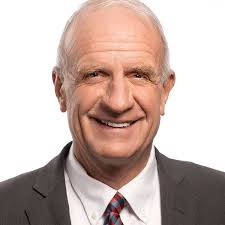






In this episode, Philip Amerson welcomes Bob Hill, Dean of Marsh Chapel at Boston University and professor at the School of Theology, for a thoughtful conversation about the evolving landscape of theological education, the unique depth of the Gospel of John, and the ongoing importance of parish ministry and pastoral leadership. Their friendly and insightful exchange brims with wisdom from decades in ministry and teaching, and offers encouragement for all who care about the future of church life and theological reflection.
Three Key Takeaways from the Episode:
1. Theological Education is Evolving, but its Foundations Remain Vital
Bob Hill and Philip Amerson reminisce about their long involvement in theological education, noting the ever-shifting context and the valuable constancy of scriptural engagement. Bob Hill shares that despite changes in student demographics and interests, there remains a “fascination for the scripture and with and in the scripture.” Faculty at Boston University, both longstanding and new, bring energy and global perspectives, ensuring that students continue to wrestle with pivotal texts and ideas. The episode highlights the importance of not just academic study but also spiritual and pastoral formation for future church leaders.
2. The Gospel of John: Embracing Difference and Depth
A portion of the conversation dives into the uniqueness of the Gospel of John. Bob Hill reveals that the one word he wants his students to remember is “different,” emphasizing the Gospel's mysterious and multi-layered nature. Both speakers reflect on the many “twists and turns” in Johannine literature and encourage new and seasoned readers alike to remain open to the Gospel’s depths, rather than simply seeking quick summaries or easy conclusions. This approach, they argue, mirrors the complexity and wonder at the heart of faith.
3. Reclaiming the ‘Romance’ and Civic Power of Parish Ministry
The episode addresses changing attitudes toward parish ministry, as fewer students pursue traditional parish roles. Yet both Philip Amerson and Bob Hill make a compelling case for the privilege and beauty of local church leadership, describing it as an opportunity to “speak about what we don’t speak enough about in civil society.” They also highlight the role of clergy as “citizen advocates,” nurturing civil society and providing a grounding, hopeful voice in times of change and resistance. The conversation ends with an appreciation for poetry’s power to nourish the soul and sustain hope.
To Be and Do continues to offer thoughtful dialogue for those engaged in ministry, theological study, and the life of the church. This episode is rich with practical wisdom, inspiration, and a spirit of honest, hopeful inquiry.
Philip Amerson [00:00:00]:
Greetings everyone, it's Phil Amerson again with Dr. Robert Allen Hill. I'll call him Bob. He's the Dean of Marsh Chapel at Boston University, and he's also a professor in the School of Theology. Bob, welcome again. It's good to have you here.
Bob Hill [00:00:17]:
Honored to be with you, Phil.
Philip Amerson [00:00:19]:
We're going to talk on this episode about theological education. Both of us have given a lot of time and energy to that, and both of us, I think, have seeing the changing world that is still there. What do you see at BU School of Theology, Bob, in these days? Who are the students that are there? What's happening with the, the pursuits of the faculty, that sort of thing?
Bob Hill [00:00:48]:
Well, thank you for the question, and Phil, you have had a long history in and through and with theological education yourself. You could probably and more fully respond to the question. I'm thinking any number of examples there from your own life and work. Um, here is confession being good for the soul. I teach the Gospel of John every fall at 8 AM on Monday morning. It's a self-selected group of people. And I do it then because I, I, I, then I can get on to the rest of the week. And you know, there is still a fascination for the scripture and with and in the scripture.
Bob Hill [00:01:41]:
And we are on my first combo of teachers at Union, Raymond Brown and J. Lewis Martin, sort of set, set the direction for the stuff still. For the study of the Gospel of John with endless changes over time. And these students at 8 AM on Monday— I know they get there a little late and the tea isn't always good, and yeah, they immerse themselves in the rendering of Scripture. And that's very important to me, particularly as a Methodist and We can pause there, but so that continues apace, and I think that's very important. Likewise, the connection to the work and the theological reflection on pastoral leadership, if I may, Phil. So I'm not teaching this year this course, but every now and then I teach a course, this carries the name Pastoral Leadership, and what I mean by that is everything but Sunday. Monday to Saturday and reflecting on what's happening and gaining and guiding and guarding the capacity for what you know very well, second-level listening.
Bob Hill [00:03:16]:
To what is being said and what's not said, and why isn't it said. Yeah, and that's where preaching and pastoral ministry visitation come in. So I think theological education does best when it stays close to those sorts of things. We have just a range of opportunities for study at the School of Theology, and my dear friend Chris Evans, who's now just retired brought the history of Methodism to bear, and Dana Robert, who's premier global— excuse me— voice in Christianity around the world, and any number of other folks who are really doing very well are fairly recent. Well, she's been here now since COVID so 4 or 5 years, our Dean Soojin Park, brings her own intellectual zest, vim, vigor, vitality, pepperino. And so I'm a huge supporter of what we're trying to do here, and I'm grateful to be alongside and participate with these, these fine— and now this faculty, fairly young faculty, which is good too. Yeah, good.
Philip Amerson [00:04:41]:
Well, you've just set me off on 3 or 4 directions and we don't have time to do them all. But what a great faculty. And I mean, you know, Soojin Park was on our faculty at Garrett back when I was there.
Bob Hill [00:04:56]:
I remember.
Philip Amerson [00:04:57]:
And how can Chris Evans be old enough to retire? That's impossible. But, and Dana Robert, oh, there's no one better in terms of international questions around health and faith. But I want to go to the Gospel of John. I want to go back to that. And I have been rereading, and I am amazed at how many— and I'd be interested— it feels to me as I read along, there are all of these turning points. You know, I used to think it gets summed up near the end when, "I tell you this so that you might have life," and that, you know, But no, no, no. Almost from the beginning, there are these little moments of twist and turn. For a long time, one of them was where Jesus says to the disciples, "I no longer call you servants, but friends." Yeah.
Philip Amerson [00:05:50]:
So what would you share? How can we better approach maybe all of Johannine literature? But let's just talk about the Gospel of John, because I don't want to go down that hole. Where might there be some places people should be attentive to what the writer is doing?
Bob Hill [00:06:15]:
Yeah, and you put it very well, Phil. I think one of the ongoing and captivating features of the Fourth Gospel is its sense of mystery to which you're pointing and probing. It's not just the first half of the Gospel with the seven different signs, or the second half really, which, which is the high priestly prayer. John still chooses to write a Gospel, so he keeps more or less the Gospel form and format., and that sense of depth, that sense of mystery, abides. And it's— and this is from my angle of vision— a beautiful thing. Even for somebody who's fairly new to the study of Scripture, it's evident. They catch that there's something different going on here. So here I'll spill the beans.
Bob Hill [00:07:25]:
The only word I require the students to remember from the course is different. If you don't hear anything else about the Gospel of John than this: John is very different, and you're pointing to that.
Philip Amerson [00:07:38]:
Excellent, excellent. Well, because we have limited time, we maybe need to do a whole podcast on maybe 10 weeks on— I could— but let's talk about theological education, because one of the challenges for me has been the way pastoral ministry has lost its allure for many younger people. And I know in many places, persons no longer are going after the M.Div. degree. They may want to choose an M.A., or if they receive an M.Div. degree, they're not particularly interested in ministry in a local parish. And one of my projects in these last years of my life is to remind people of the romance of being in the parish. Or another way to put it is, I'm not certain we've helped students know that they may not be the first responders in a time of crisis, but they're often one and a half.
Philip Amerson [00:08:50]:
Yep. So reflect a bit about that, and I'm actually being a little more hopeful. I'm seeing some little boomlets of people who are interested in parish ministry, and I'm wondering if you see any of that, or how we might encourage people toward that larger vision of ministry in a parish.
Bob Hill [00:09:18]:
Well, first of all, and your own trajectory in ministry, Dr. Amerson, aptly embodies this. I think we need to have more people than we currently do who are full dual citizens, both in church and academia. So your work all through the churches and in Bloomington and then out on the West Coast and back at Garrett That combination, and I try to model that here all the time. We've kind of gotten to a point now, 2 generations or 3 generations ago, pretty much everybody in the faculty of School of Theology would have been an ordained Methodist elder. The number of those folks is kind of shrunk. You're looking at them. No, I mean, they're a few.
Bob Hill [00:10:16]:
It's just a different time. Time, and that we need to work at bridging that, which we can and continue to do. All I can say in broader scope is what a privilege to be in ministry. I had a wedding here last week. We have a funeral coming this week. To be not only invited but welcomed into homes to speak about what we don't speak enough about in civil society generally. And church has a role to play in strengthening civil society, as you've indicated, but we don't— there's a rare beauty to that welcome into the lives, the depth of the lives of others. And it's a real privilege.
Bob Hill [00:11:27]:
And I think sometimes people don't quite catch that until they are appointed somewhere or sent somewhere or called somewhere, and then after a while, light goes on. Within that, I will simply add the regular minister of the gospel in a congregation or community really needs— she needs to have some friends around with whom she can have coffee, who know the ministry as well. We don't do quite as much probably as we should do. And, you know, getting to know you in 1995 and all those good folks— Hennepin Avenue, Rod Wilmouth, and just the whole— Tom Trotter, Mark Trotter, all these giants of faith and ministry— they stay with me, and I'm sure they do with you.
Philip Amerson [00:12:28]:
Yeah, you know, what this has led me in part to do is I, for a while, looking at Minneapolis, would talk about the clergy protesters. And I don't use that language any longer. To me, they are citizen advocates. They are voices for civic life.
Bob Hill [00:12:52]:
Yeah.
Philip Amerson [00:12:53]:
And, or in Minneapolis, I love the citizen singer notion where they sing songs of resistance. I mean, Hennepin Avenue was filled on more than one occasion with people just singing songs of faith and resistance. So I think, I think that's a piece of what I'm seeing. Yeah. Bob, I want to move us in closing. I ask many of the people who visit, is there some item, a photograph, a poem, a story that keeps you encouraged or focused in your ministry work? And if there is, would you share one or two of those with us?
Bob Hill [00:13:36]:
Thank you, Phil. Just, just one. You mentioned poetry over the years, and particularly here at Boston University. Robert Pinsky was here for such a long, wonderful time, and any number of others. The reverberations of the wondrous inheritance of poetry. The other week I was quoting Shelley, the desire of the moth for the star, of the night for the morrow, the devotion to something afar from the sphere of our sorrow. So if you want For me, other than the scripture itself, it's the inheritance, the poetic inheritance that is not too far from us. And I try and keep that close.
Philip Amerson [00:14:45]:
Poetry. Great. Thank you, my friend Robert Allen Hill. Bob, you are an inspiration to me and a good friend, and you, you cause me to both continue to try to be radically honest but also find the hope that is all around.
Bob Hill [00:15:08]:
May it be so. By the way, You know that wonderful theologian with whom you live, Elaine? Would you just tell her I said hello?
Philip Amerson [00:15:17]:
And I will. And speaking of singing resistance, you tell Jan, your musician choral person, that we send our love. Okay, take care.
Bob Hill [00:15:31]:
God bless.
Philip Amerson [00:15:31]:
Thanks so much.
Bob Hill [00:15:33]:
Yeah, bye-bye.


