

Understanding ICE, Civil Enforcement, and the Immigration Legal Maze with Christie Popp
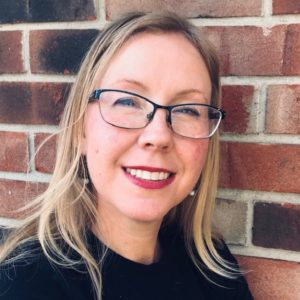


Show Notes: To Be and Do Podcast
In this eye-opening episode of the To Be and Do podcast, host Philip Amerson sits down with attorney Christie Popp, a founding partner at Popp and Bullman Law Offices, to demystify the realities of immigration law and its intersection with current U.S. judicial practices. Christie Popp offers a candid, accessible overview of how immigration enforcement really works and the everyday injustices faced by immigrants—especially in Indiana and the broader United States. Whether you’re new to these topics or seeking a deeper understanding, this conversation sheds light on critical, often-misunderstood issues within our legal system.
Three Major Takeaways
1. The True Nature of ICE and Immigration Enforcement
Christie Popp breaks down the role of ICE (Immigration and Customs Enforcement), clarifying that—contrary to common public perception—most immigration violations are civil, not criminal offenses. ICE operates differently from standard law enforcement: they don’t require a judge’s warrant to detain someone suspected of an immigration violation. Instead, a supervising ICE official alone can authorize an arrest, a stark departure from the checks and balances traditional police must follow. This gray area results in practices that skirt constitutional protections and often target individuals based on ethnicity or language.
2. The Problem with Immigration Holds and Local Enforcement
The conversation delves into how local jails interact with ICE through what are called “immigration holds.” Christie Popp underscores that ICE can request local jails to detain individuals—who have already been cleared for release—for up to 48 hours purely on suspicion of a civil immigration violation. This practice leads to unconstitutional detention for civil (not criminal) reasons, trapping many non-violent individuals, often arrested for minor infractions like driving without a license, in a complicated legal web. The system is deeply flawed, as it penalizes people on civil grounds and disproportionately affects Latino communities.
3. Economic Hardships Within the Detention System
Beyond legal injustices, Christie Popp highlights the pervasive economic burdens placed on detained individuals. Many face exorbitant fees for basic necessities—such as phone calls or commissary items—in jail, and those in immigration detention centers often perform mandatory labor despite having committed no crime. These policies not only capitalize on vulnerable populations but also underscore how the criminal and immigration systems have become increasingly punitive, even toward those who are simply seeking a better life.
Key Quote:
“ICE is really supposed to be a civil enforcement agency; they don’t get warrants from the court... The only person who is signing off on the arrest is a supervising official within the agency.” — Christie Popp
Further Resources:
Check the episode’s website for additional materials and YouTube links referenced by Philip Amerson and Christie Popp.
Don’t miss this essential listen if you want to better understand the complexities of immigration law and the often-unseen obstacles faced by immigrants in America today.
Philip Amerson [00:00:00]:
Well, hello everyone. We welcome you again to the To Be and Do podcast. This is Philip Amerson, and this is a recording that I've been looking forward to for a number of weeks. We're fortunate to have Christie Popp, who is a founding partner of Popp and Bullman Law Offices in Bloomington, Indiana. And I heard Christie on a recording. We will add the link to this YouTube recording so people can see that. But Christie, welcome. It's great to have you as part of this podcast.
Christie Popp [00:00:47]:
Thank you. Thank you for having me.
Phil Emerson [00:00:50]:
I. I think people would be interested in knowing a bit about your background. Where are you from? How did you determine you wanted to practice law? And I think you work in immigration and business and related matters. Tell us a little about yourself.
Christie Popp [00:01:09]:
Sure, yeah. My practice is exclusive immigration. My partner does some business and litigation, but I only do immigration now. I started practicing in 2005, and I grew up kind of in various places, but my family is mainly from the Louisville area, both sides of the river. And I went to college at iu. I studied Latin American studies as my major. And then I went to law school at Vermont Law School. My interest in going to law school was really focused on social justice.
Christie Popp [00:01:48]:
I wanted to work on issues of social justice, and I went to Vermont because I wanted to work on environmental law. Actually, that was kind of my primary interest. And I got my JD and master's of environmental law at Vermont Law School. Right out of law school, I went to work for the Food and Agriculture Organization of the United nations, which is located in Rome. And I worked on a couple different projects related to water law issues. But I eventually realized that I wanted to work less in policy and more direct representation of clients. And I was kind of trying to figure out what I wanted to do. One of my mom's friends was an.
Christie Popp [00:02:35]:
Oh, sorry. Was an immigration lawyer, and he knew that I spoke multiple languages and that I had this background in Latin American studies and suggested that I consider doing immigration. And that's really the story of how I got into it. I mean, I had been involved in working on social justice issues and working with the Latino community before I went to law school. I had a year off between undergrad and law school, and I worked at Indiana Legal Services. And since I speak Spanish, I worked some with the Spanish speaking community. So it wasn't out of nowhere, but it wasn't my initial desire for sure.
Phil Emerson [00:03:12]:
Well, so much there. I can test you on this both sides of the river thing. How do you pronounce L, O, U, I, S, V, I, l L E. It's Louisville. Well, I think there's more. The north side of the. I was born in New Albany and lived there the first years of my life. And so I know there's a difference between Louisville and Louisville.
Phil Emerson [00:03:40]:
Yeah, interesting.
Christie Popp [00:03:42]:
Yeah, no, definitely in the Louisville category.
Phil Emerson [00:03:45]:
That's right. That's right. And I spent time in Central America, and I'm older than you, but was engaged in what was in those years called Witness for Peace, and was in Nicaragua and saw the tragedies there that actually predate the tragedies we experience now. Well, of course, they go back a century or more. But thank you for being with us and thank you for your work. As I said, I heard you offer an outline of your work and especially around immigration law. Part of why I wanted to visit with you is my experience is we have a deep poverty of knowledge, not only about immigration and immigration law, but even about the judicial system. And so can you maybe give us a quick, quick overview of where you think we are today in terms of the practices of ICE and they're detaining people and how that law is being reinterpreted these days?
Christie Popp [00:05:17]:
Yes, that's a very big question. I could probably spend the entire podcast talking about the new measures that ICE is taking. So ICE is the enforcement, detention, removal arm of the Department of Homeland Security. Back in the old days, it used to be the ins, and the INS was the service that both took applications for people who wanted benefits like green cards or asylum, and then also dealt with the deportation side. And then when the Department of Homeland Security was created, it was separated. These measures were separated. So there was the Citizenship and Immigration Service, which is the benefit side, and then ICE is the detention and removal side. I think one thing that a lot of people don't know about ICE is that even before what's going on right now, they are not exactly like other law enforcement agencies.
Christie Popp [00:06:19]:
They're not exactly like the police. They are primarily, when we're talking about immigration, they're dealing with civil enforcement, not criminal enforcement. And that's because most immigration violations are considered civil violations. The leaders of our country right now are using terminology like criminal aliens, they're illegally here, they're committing crimes, etc. And that's not entirely true or accurate. It's a lot of misinformation to kind of make immigrants look like, just by nature of being here, that they're committing some sort of crime, and most of them are not working without authorization. Those kinds of things, those are not crimes. So ICE is really supposed to be a civil enforcement agency, they don't get warrants from the court in order to arrest somebody or detain somebody for the civil enforcement to put them into deportation proceedings.
Christie Popp [00:07:15]:
And this is kind of a big problem because really, the only person who's signing off on the arrest is a supervising official within the agency. It's not a neutral magistrate. It's not a court. So if a police officer wants to go arrest somebody on suspicion of committing a crime, they have to get a judge to sign off and issue a warrant. A neutral magistrate. ICE doesn't have to do that. And in fact, ICE hasn't really been. They don't even have to have probable cause that somebody is unlawfully present in order to detain them.
Christie Popp [00:07:50]:
They have to have reasonable suspicion, which they have broadly interpreted to basically mean you look Latino, or in this case, in some cases now, Somali, you speak Spanish, you're in the wrong area of town. There's a whole list of things that officials have gone through that make them arrest people. And what we've seen are some very are increasingly aggressive and violent arrests, violent arrests of US Citizens and permanent residents who look Latino, who are Latino, who speak Spanish, who are in the wrong place the wrong time. So the ICE has taken. They never had the same restrictions that law enforcement has had. They technically are supposed to comply with the Fourth Amendment, but they've always kind of been on the border there, and now they've taken that and run with it. And increasingly are becoming more aggressive in their campaign to arrest for civil offenses. Not even for crimes, not violent offenders, nothing.
Christie Popp [00:08:52]:
Just for people who they suspect might have committed an immigration violation.
Phil Emerson [00:08:58]:
Yeah. And as I understand it, this is important in so many ways, but one of the ways is around immigration holds that folks like Attorney General General Todro Kita want on persons who are in jail. And technically their immigration matters are a civil matter. And how do you extend a jail sentence so that ICE can come in and detain them?
Christie Popp [00:09:32]:
Yes, this has been a huge problem for the entirety of my career, and I've been practicing about as long as ICE has been in existence. So under the Immigration act, an ICE officer or DHS can request that a local jail hold somebody that they suspect has committed an immigration violation. So what this would look like is that the local police would arrest somebody for committing a crime. And it could be a violent crime. It could be driving without a license. I see driving without a license a lot in some of the rural parts of Indiana. So that a person is driving without a license, they get put in jail. They're fingerprinted.
Christie Popp [00:10:15]:
ICE gets that information through a database that they share with other law enforcement agencies. ICE contacts the local jail and says, we have suspicion that that person has an immigration violation and we're going to ask you to hold them for up to 48 hours after they're allowed to be free. So the problem with this is that the person has already been determined to by a court or otherwise that they can leave jail. So they're either innocent or they posted bond or whatever the case might be, they're free to go. And the sheriff of that jail, or if it's a city jail, the head of the jail then rearrests them for this ICE hold. On a civil violation. On a civil violation. So the anti immigration advocates are, the proponents of hold say, well, this is how we can ensure that the most violent criminals get arrested.
Christie Popp [00:11:10]:
The problem is that it's not the violent criminals who are getting these ICE holds because the violent criminals are not getting released generally back into society. I'm not saying it never happens. But most of the people who are picked up with these holds at the local jails have nonviolent or minor offenses. And the bigger problem for me is that they're not constitutionally allowed in a jail to rearrest somebody without a warrant. So it's an unconstitutional arrest for a civil offense. And that's really the bigger problem. This is just an easy way for ICE to get people, but it's not really solving any kind of criminal problem.
Phil Emerson [00:11:53]:
And for those that don't know this wider web, and I only know parts of it, I do know, for instance, that persons who are, who are undocumented, who have a driver's license and are pulled over, if they don't have a Social Security number, their driver's license can be taken away. And then how do they get to work? And then they are pulled over and they don't have a driver's license. And that's just one of many, many ways folks are caught in this web.
Christie Popp [00:12:29]:
Absolutely. Indiana does not give driver's licenses to people who are out of status, who don't have legal status. So you have to have a valid visa, like a student visa or your green card or something like that. If you are undocumented, you cannot get a driver's license in Indiana. And unfortunately unscrupulous police officers, and I don't want to cast aspersions on all police, but there are unscrupulous ones who know that many undocumented people are Latinos, they cannot get a driver's license. So I always call driving without a license actually is driving while Latino. They're getting arrested for driving while Latino. They're getting stopped for crossing the yellow line, for having a brake light out, for not being able to see the license plates plate.
Christie Popp [00:13:14]:
The windows are too tinted. You know, these. They're really justifications for pulling someone over, finding out they don't have a license and arresting them.
Phil Emerson [00:13:24]:
So let's, let's step away. Well, let's step to the side of immigration for a moment and just talk about the judicial system. I have friends that recently have told me they were shocked when I told them that in most jails there's a pay to stay system or a system where people are charged exorbitant prices for telephone use or for the commissary. We really have a whole new pulp or prison kind of structure in our state and nation. Am I right?
Christie Popp [00:14:09]:
Yes. Yeah, definitely. It's a problem. I've had many clients whose family members were not able to pay the commissary to pay for the telephone or worse. Couldn't figure it out because it's all online now. It's more of a technological way to do it. So, yeah, that definitely is a problem. And then of course, the people who are held are forced to do certain types of labor to pay for their.
Christie Popp [00:14:37]:
To pay for their labor within the jail. Now, keep in mind, when we're talking about immigration, they haven't committed crimes. They're in a jail because our detention facilities are jail. They're in jail. They have jumpsuits on, they're in cells. They have the same restrictions as people who committed crimes, but they're there not because they committed a crime, but because they committed a civil immigration violation.
Phil Emerson [00:15:05]:
Well, we have gone through a period of time here very quickly. I warned you that we were only going to have 12 to 15 minutes. And my. There's so much more to talk about. The good news is we're going to do this again. And so I want to thank you, Christie, for this introduction. And as I've already said, we will post other materials that you may have on our website so that people can get more information. But I want to thank Christie Hopp for getting us started on this important topic.
Christie Popp [00:15:46]:
Thank you.


