

Because: Learning from Extended Families: Challenging Traditional Notions in Church Communities

 Apple Podcasts
 Spotify
 RSS Feed
 Episode Overview
The conversation focused on reflecting upon recent calls by Indiana's governor and lieutenant governor to emphasize the biblical mandate behind the so-called "nuclear family" during the month of June. The discussion challenged the narrow interpretation of family promoted by political and religious leaders, highlighting the broader, more inclusive portrayal of family found in scripture and lived experience. Personal anecdotes, biblical references, and a powerful story about a professor’s encounter with Native American family life were used to question exclusionary definitions and urge listeners to reconsider what it means to be “God’s family.”
Three Takeaways
1. Questioning the “Biblical Mandate” for the Nuclear Family
A key theme that emerged was the critique of official attempts to define family strictly as one man, one woman, and children. The discussion explored how this interpretation is not only limiting but also inconsistent with the biblical record itself. Several points were raised, including references to Abraham and Sarah, Moses, and even Jesus, none of whom fit neatly into the so-called traditional nuclear family model 00:59–01:14. The conversation underscored the selective reading of scripture used to justify these narrow definitions and highlighted the exclusion of orphans and widows from such narratives.
2. Learning from Broader Family Traditions
One concept discussed was the experience of a Christian professor who, tasked with teaching about family in the Midwest, encountered Native American forms of family that differed radically from the stereotypical nuclear setup. Rather than insisting on his own definitions, the professor was humble enough to learn from these families, realizing that kinship and support go far beyond traditional images 02:11–02:56. This anecdote illustrated the value of cultural humility and openness to learning about real family dynamics as they are lived by different communities.
3. Expanding Faith Communities’ Definition of Family
The discussion explored how many churches proclaim themselves as “family churches,” yet often fail in practice to fully welcome single mothers, orphans, or widows 03:31. A call to action was issued for listeners and faith communities to rethink belonging and kinship within the “Kingdom of God,” encouraging greater inclusivity and empathy. The segment urged that being part of God’s family means embracing everyone, not just those who fit a prescribed mold.
Final Reflection
Listeners are encouraged to move beyond received notions about who constitutes a family and to embrace diverse, inclusive forms of kinship, learning from both scripture and the lived experiences of others 03:54.
Phil Amerson [00:00:01]:
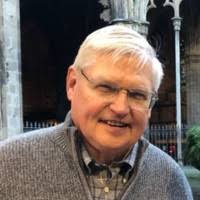
Greetings. This is Philip Amerson coming to you on podcast because. Just because we want to give a little time of reflection frequently. For those of you who listen, recently our governor in Indiana and the Lieutenant governor endorsed that we should focus the month of June on the biblical mandate and throughout the whole history of the nuclear family. Oh, these guys, they never cease to amaze me. You know, they managed to leave out the orphan and the widow and, and they claim that scriptures are all based on one man, one woman. And you know, I get it, I understand what their ideology is, I understand what their narrow theology is, but it's wrongheaded and it's not biblical. Let's be honest.
Phil Amerson [00:00:59]:
Where do you want to start? Abraham and Sarah? Oh, let's see. Abraham married Hagar. Well, Hagar. No, we don't want to do that. We could go to David. No. Moses? No. Jesus was a traditional nuclear family.
Phil Amerson [00:01:14]:
I don't think so. How about Paul? How about John on the island of Patmos? How about the Ethiopian eunuch? How about. Well, it would just go on and on. I had a professor, Earl D.C. Brewer. What a great man. And back in the 1950s he received money from, I believe was the National Endowment for Humanities, maybe it was the 60s and he was to go into some of the plains states in the Midwest and teach about family and strengthening family. And I remember Earl said he went to one distant location, a church, and I think it was in Oklahoma, but it could have been in the Dakotas or Nebraska.
Phil Amerson [00:02:02]:
And he said he got there and people weren't there when he arrived. And he was all prepared with his lecture on how to live as a family. And he said then a pickup truck showed up and then another, and then some vans and some cars. And he said, the family's unloaded. And he said this was a Native American reservation and family to them didn't begin or end with mom and dad and two kids and a dog and a cat named Spot. Nuclear family was foreign and Earl was wise enough and a Christian enough and clear headed enough to say, we gathered those 40 or 50 people in and I sat down and they taught me about family in ways that I didn't know. Maybe it's time. Oh, it's pastime for some of these people who think they have the truth in their pocket and they're certain that they're going to teach us all how we should live.
Phil Amerson [00:03:08]:
Maybe they should be like Earl D.C. Brewer and say, I looked out and saw these families, these extended families getting out of those pickups and those vans and I thought. I'm the one that needs to learn from them about how to be a family. Oh, dear friends, churches claim to be family churches. And often they don't welcome that single mother or they don't welcome that orphan child or they don't know how to treat the widow in their midst. Let's rethink what it means to be God's family, to be in a kinship in the kingdom of God with everyone that's God's family. God bless. A little thought for today.
Phil Amerson [00:03:57]:
Bye. Bye.