

Connecting Community and Ministry: Tyler Brinks on Asset Based Development and Convening Change

 Apple Podcasts
 Spotify
 RSS Feed
 Connecting Community and Ministry: Tyler Brinks on Asset Based Development and Convening Change
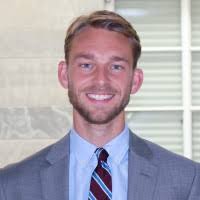
In this insightful episode of To Be and Do, host Phil Amerson welcomes Reverend Tyler Brinks of First Presbyterian Church, Bloomington, Indiana, for an authentic conversation about aligning identity with action, the power of connectorship, and the transformative philosophy of Asset Based Community Development (ABCD).
The discussion opens with Amerson reflecting on the recurring tension many feel between “doing” and “being,” emphasizing the importance of intentional living that fuses who we are with what we do. This theme sets the stage for an exploration of ABCD, a community-building approach championed by John McKnight and Jody Kretzman, which focuses not on deficits but on the hidden and communal gifts within neighborhoods and individuals.
Brinks traces his own journey with the church, describing how key mentors and a series of serendipitous associations—beginning at his home church in Michigan and later through meaningful connections in Indianapolis—brought this philosophy to life for him. He shares the pivotal influence of figures such as Reverend Fernando Rodriguez, Mike Mather, and Diamond Hargis, and the surprising intersections of their work that shaped his approach to ministry.
Central to the conversation is the idea of “connectorship.” Amerson recounts a story about John McKnight, who highlighted the role of convening—bringing people together—as more foundational than traditional models of leadership. Speaker B echoes this, attributing his own emphasis on building relationships to the gentle encouragements of his parents and a personal awareness of the knowledge and wisdom found in others.
The episode closes with a meditative word from Speaker B, who shares a reflection from Howard Thurman’s “Meditations of the Heart.” Using the image of the jack pine—whose seeds only open after intense fire—he inspires listeners to recognize that times of challenge may unlock latent gifts within us, pointing to new beginnings and resurrection even in the ashes.
Key Takeaways
- Asset Based Community Development: Real change and growth begin by recognizing and leveraging the gifts already present in individuals and communities—not focusing solely on needs or deficits.
- The Power of Connectorship: Convening and connecting people is a vital, often undervalued, leadership skill that enables shared wisdom and collaborative action.
- Embracing Unexpected Journeys: Crossroads in life and ministry frequently arise through organic relationships and open-hearted exploration.
- Transformation through Challenge: As illustrated by the jack pine, our deepest gifts often emerge in times of trial, offering seeds of hope and renewal.
- Learning to See Differently: True humanization requires acknowledging both flaws and gifts, learning to foster environments where everyone’s strengths are noticed and celebrated.
Philip Amerson [00:00:00]:
Greetings. This is Philip Amerson with another episode of To Be and Do podcast where we are concerned to align who we are with what we do. And so often we do and do and do as Walt Wangren wrote in one of his books, and we forget to be. And one of the people that brings those worlds together that I know is Tyler Brinks. And Tyler, it's great to have you with us again. We heard in the first podcast with you something of your history and your work as pastor. One of the things that I think I'm going to go back to the question of is the church in decline or not? And I want to frame it in this way. One of the people that has influenced both of us is the work of John McKnight who wrote and taught about asset Based Community development.
Philip Amerson [00:01:06]:
And I met you through someone that was influenced that way as well, a guy named DeAmon Harges who is in Indianapolis. And one of the things that John McKnight helped me see was the power of associations and of groups and the way our culture can focus down so narrowly on what an individual thinks or does and miss the power of the gifts that individuals bring and the gifts especially if they're shared in community. So that's my little sermonette for today. But, but tell me a bit about your discovery of ABCD asset Based Community Development and how you think that helps you think about ministry. Yeah.
Tyler Brinks [00:02:06]:
Product of sort of right time, right place, right people. My home church, as I was heading off to seminary as in my senior year of college, was going through its own staff changes. And so Nate Phillips was hired as senior pastor. He was filling out some associate roles as folks had departed. And his first, the first person he, he hired was or you know, with album search committee and so on, but was a friend of his from Delaware who had also served in Indiana, the Reverend Fernando Rodriguez. And so Fernando become the pastor at my home church, Kirk in the Hills in Bloomfield, Michigan. And again, sort of the right timing as Fernando was arriving as the sort of pastor for missional renewal, outreach and so on. My dad was on that, on that mission committee of the church.
Tyler Brinks [00:02:57]:
And Fernando had recently contributed as a research assistant to a new book as my dad was serving on the committee at Kirk in the Hills at the home church for mission and for outreach and community partnerships. And Reverend Fernando Rodriguez was arriving as the new pastor there. And Fernando had recently contributed as a research assistant to a book maybe published a year before titled Having Nothing, Possessing Everything, Finding Abundance in Unexpected Places, which is in a small way like why we're on the call today. So it was a delight for me, Phil, like, when I got to Bloomington to have, like, all of a sudden, I actually when I reread Mike's book. And so Mike, of course, is somebody that you hired as an associate pastor at Broadway United Methodist Church in Indianapolis. Fernando hadn't worked there, but was sort of lived nearby and got connected to Mike and to then DeAmon Harges and just kind of this beautiful confluence, again, of things that came together. And so it was like my dad, actually, who was like, you got to read this book that Fernando gave us. Like, you'd really like it.
Tyler Brinks [00:04:20]:
And I, like, wrote a paper in seminary about it. I talked to Fernando a little bit. Fernando and I almost immediately connected because I was, you know, pretty close to saying, you know, I want to go to Princeton seminary as he was arriving, but I hadn't actually made that choice. But he was, you know, a big proponent of attending there. We also learned that we had the same birth date, so we were Both born on January 23rd. So just enough of a connection to like, really sort of solidify a sincere and sort of. And Fernando's a very easygoing guy to get along with. Anyway, so, um.
Tyler Brinks [00:04:55]:
And so I, like, had Mike, and then I had known about D. I had never met Mike. I had never met DeAmon, but I knew Fernando very well. I never met you, Phil. You know, like, all these things that are kind of far out there and, you know, just sort of names on a page. And then I sort of get encouraged to apply to second in Indianapolis to be one of the residents. And so when I head there, and it's actually Fernando who encouraged me to ask about Witherspoon Presbyterian Church, because for the last nine months before Winterbourne became their senior pastor, Fernando was their interim pastor.
Philip Amerson [00:05:35]:
Oh, wow.
Tyler Brinks [00:05:36]:
And so When I visited 2nd and their interview, various questions, and there was a few of us there, not everybody had been accepted and so on, and I was just like, oh, I wonder, has Witherspoon ever been a partner church? Large church ministry. Everybody sort of gets paired with a smaller solo pastor church. And so nobody at that time had been at Witherspoon, but I had this connection through Fernando. So I heard it's a beautiful, wonderful church. I wouldn't mind being connected. And I had already served a black Presbyterian church in Philadelphia during seminary, so it wasn't like a totally foreign thing, plus a personal connection. So, of course, when I got to Indiana and to second months later, they're like, you know, oh, your partner church will be Witherspoon So it's sort of. Sort of the meandering way that these things sort of, you know, over the course of.
Tyler Brinks [00:06:29]:
I mean, I. Fernando, came to our church in 2017. We didn't meet until 2023, you and I. 2024. Actually, we met in 2024, but I didn't meet Mike or Diamond until 2023. And I think I had reached out to Mike because I had reread his book, like, Finally Being on the ground in Indianapolis. And he has a chapter on, like, writing sort of, what is it, like, Elizabethan letters of introduction to, like, try to go on learning journeys and talk to people you're. You admire.
Tyler Brinks [00:07:07]:
And so I was like, why don't I just do this to Mike? Like, I should just reach out to him, and he probably will be generous in as much as he's anything like what he's writing about in his own book. And of course, he was very gracious. And he's like, you need to meet Diamond. How have you not met DeAmon yet? You're down the street. So I met DeAmon and another one of their friends, Wild Style. So we met, you know, at the coffee shop nearest to Broadway United Methodist Church. It happened to be, like, the week before, like, I preached at second, and as a resident, like, you would only preach, like, the sort of end of the program year, early summer of your second year. So it was, like, it was very late.
Tyler Brinks [00:07:51]:
I mean, I had been there quite a while before I, like, finally sort of met Mike and maybe connect with Mike in, like, March, April. Damon's busy schedule wasn't until late May. And then just kind of, I don't know, like, they're like, when are you preaching next? I was like, oh, well, preaching, like, this Sunday. And while it sounds like, d, you should go to church, he's like, I don't go to church, but you should go to church. And. And so Damon then, like, I'm preaching, you know, that coming Sunday. And, like, very. He is in the fuse, you know, And I think, like, I feel like I've heard, you know, sort of a silly adage of, like, don't meet your heroes.
Tyler Brinks [00:08:35]:
You know, like, they're going to disappoint you. And certainly, you know, you. You humanize folks and you see the fuller picture of who they are. But, like, I've been really blessed to, like, be appreciative of the heroes I've met, you know, the people I've really looked up to. And I think certainly a part of that's been the role, real personal friendships. And connections I've had going into those things. But it's just such a beautiful and almost mysterious way that I've been connected to these people whose work I've tried to model, which didn't even really say anything directly about abcd, but that's, you know. Yeah.
Philip Amerson [00:09:14]:
So ABCD is looking to see the assets that are all around in the community, in a neighborhood, but in individuals that are often overlooked. And we're in this society so prone to see the deficits, the problems. And part of humanizing is seeing not only the real flaws, the flesh and blood dilemmas, but also learning to see the gifts. Speaking of the scripture text about the blind man, indeed, how do you find sight? I want to say to you that as you were telling that story, there was one word that kept recurring. I don't know if you were aware of it. I may not have been, probably not, but it was the word connect. Connectors. Connectorship.
Philip Amerson [00:10:09]:
And one of the great moments in my life was John McKnight sort of the godfather of asset Based Community Development, or one of the. He and Jody Kretzman were the two that sort of brought it into civic life and into academic settings. But I was at lunch one day with John with a seminary president, and this seminary president was going on and on and on and on and on about leadership programs and working with this group and that group and the other on leadership. And John didn't say anything. And I'm wondering what he's thinking. And as we're leaving, he helps this seminary president with a coat and then says, you know, leadership is good, but you might want to think a little bit more about connectorship, or as Peter Block puts it, another person who is sort of in this orbit. The real role of a leader is to convene, is to help convening happen. And I've watched you as you're open to that, as you're always.
Philip Amerson [00:11:21]:
I see this in you, Tyler. You're always looking. Who can I meet? What can I learn from them? How can I convene in new ways? Yeah,
Tyler Brinks [00:11:35]:
yeah, that's. I don't know. I think there's a couple reasons why. Partly just my parents sort of encouraging from early, you know, growing up, like, just. Just at least say hi. You know, you don't have to, you know, stay in the conversation too long, but just it's nice to be polite or whatever. It's sort of silly. Sort of.
Tyler Brinks [00:11:54]:
I mean, not silly, but like, you know, fairly simple and childlike sort of encounter. And I also, like, I. I sort of mentioned earlier, I was kind of a quiet ish. I mean, I, I didn't, I don't think I was the most precocious. Like I was not, you know, top of my class and acing. I mean, I, you know, I was in otherwise decent classes around good people, but I wasn't like the star of the show by any stretch. Neither am I now. But it certainly was like, it was quick to sort of realize that I didn't know a lot of things and that I needed to learn from other people and just the sort of encouragement that people are often willing to sort of share with what they know and who they know.
Tyler Brinks [00:12:42]:
And it felt like a wise choice to do that.
Philip Amerson [00:12:47]:
Well, we've run through time too quickly. I'm going to put you on the spot. And the world I grew up in, preachers were supposed to preach, pray or die at a moment's notice. And so we're not going to ask you to die, please, now or pray, but maybe, well, maybe not preach. Is there some meditation or meditative thought that you're living with these days that you can share as we close out this segment?
Tyler Brinks [00:13:21]:
Yeah, I say meditate. We mentioned Howard Thurman. I brought his a poem, a collection of one of his Meditation of the Heart, which actually is a sermon I have preached and maybe one of the resurrection sermons that I feel most necessary to keep preaching. It's titled the Seat of the Jack Pine is a Meditation. I think it was also the title of one of my sermons and I'll read sort of the second couple paragraphs, but just to give context and to sort of draw it close to my home. The jack pine tree is abundant in northern Michigan. Thurman writes about it in terms of British Columbia. But it's like become one of the sort of like state trees of Michigan where I'm from.
Tyler Brinks [00:14:09]:
And now northern Michigan doesn't have a ton of forest fires, but by and large the growth of, of the jack pine forests only happen after the forest has been sort of raised, you know, to the ground by fire. And Thurman seems to have, you know, inquiry with, with a forester in British Columbia who gives some some more details about how that's the case. So it says the establishment of the majority of our jack pine stand stands has undoubtedly been established following forest fires. Seldom do the cones release their seed while on the tree. They need sustained and intense heat, not simply sunlight. And so here's Thurman's words reflecting on that preaching about the jack pine. The seed of the jack pine will not be given up by the cone unless the cone itself is subjected to sustained and concentrated heat. The forest fire sweeps all before it, and they remain but the charred reminders of a former growth and a former beauty.
Tyler Brinks [00:15:18]:
It is then, in the midst of the ashes that the secret of the cone is exposed. The tender seed finds the stirring of life deep within itself. And what is deepest in the seed reaches out to what is deepest in life. The result, A tender shoot, gentle roots, until at last there stands straight against the sky, the majestic glory of the jack pine. It is not too far afield to suggest that there are things deep within the human spirit that are firmly embedded, dormant, latent and inactive. These things are positive, even though they may be destructive than creative. But there they remain until our lives are swept by the forest fire. It may be some mindless tragedy, some violent discourse of human depravity, or some moment of agony, agony in which the whole country or nation may be involved.
Tyler Brinks [00:16:11]:
The experience releases something that has been locked up within all through the years. If it be something that calls to the deepest things in life, we may, like the jack pine, grow tall and straight against the sky. Sounds like an Easter word, Philip.
Philip Amerson [00:16:31]:
I think it is. And a great word. Thank you so much, Tyler. You know, something deep within us indeed. Thank you for your time to have me. We're. We're blessed to have you in our city and I look forward to following your ministry, whether in Bloomington or. We'll see.
Tyler Brinks [00:16:56]:
I'm glad to learn from you. And what a blessing to be connected.
Philip Amerson [00:17:00]:
God bless and. And to all of our friends. You can look online and find a way to connect with Tyler. We'll have some information, more information about him there. So thank you so much. Reverend Tyler Brinks, First Presbyterian Church, Bloomington, Indiana.