

Empowerment, Belonging, and Meaning: The Surprising Growth in Faith Communities

 Apple Podcasts
 Spotify
 RSS Feed
 To Be and Do Podcast
Episode Overview
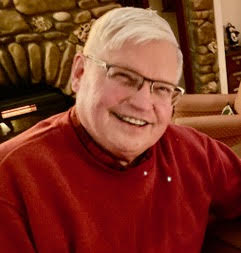
In this episode, Phil Amerson reflects on new research from the Hartford Institute for Religion Research regarding recent trends in American religious life. The episode explores the nuanced realities behind church attendance numbers, the influence and limitations of megachurch culture, and the often-overlooked power of small congregational acts. Amerson recounts personal experiences from pastoral work, sharing stories that reveal how renewal happens not just through numbers, but in the everyday acts of community, faith, and grace. The episode ends with a moving meditation on the concept of grace, drawing from the writings of Frederick Buechner.
Three Key Takeaways
1. Religious Involvement is Experiencing Modest Growth—But Not a Traditional Revival
Recent research from the Hartford Institute for Religion Research indicates a shift in religious engagement after decades of decline. Where average church attendance had dropped dramatically—from 135 in 2000 to just 45 during the COVID pandemic—it is now climbing back above 65 (01:19). Though some claim these numbers mark a religious revival, Amerson emphasizes a more nuanced picture: the increase is real, but modest and often concentrated in certain areas, especially within megachurches.
2. Megachurches Aren’t the Only Places Where Renewal Happens
While researchers like Scott Tooma and high-profile pastors like Adam Hamilton focus on megachurch growth as the vector for the future of American religion, Speaker A challenges this perspective. The episode argues that small, local congregations—both urban and rural—play a crucial role in community life and spiritual vitality (04:49). These smaller communities offer meaning, belonging, and empowerment in ways that aren’t always reflected in attendance statistics.
3. Grace and Renewal Are Found in Small Acts and Relationships
Drawing on personal experiences at Broadway United Methodist Church, Amerson recounts stories of individuals whose quiet faith and generosity became the backbone of vibrant congregational life (07:20). By highlighting the unseen power centers within small gatherings—such as a handful of women meeting for healing and Bible study—the episode illustrates that genuine renewal is about joy, restoration, and the rediscovery of shared purpose, not just numerical growth. The episode’s closing passages center on the profound and unearned nature of grace (12:21), encouraging listeners to recognize and accept the abundance already present in their lives.
Listen and subscribe for thoughtful discussions on meaning, purpose, and the everyday ways we shape our shared life.
Phil Amerson [00:01:04]:
Greetings. This is Philip Amerson with the To Be and Do podcast. You know, recently in the middle of May, research was released from the Hartford Institute for Religion Research. I've known many of the people there for a number of years, and the research plays into a theme that people are exploring around what's happening to religion in our time. Some earlier said there's a religious revival going on and they pointed to young men who were going back to church or being involved in faith groups. And some others said, no, no, no, there's not really a revival. There may be a modest uptick. Well, the Hartford Institute for Religion Research published a study that was quite interesting.
Phil Amerson [00:02:02]:
It says there has been a shift for the first time in two decades back toward more people volunteering and being involved in church. The headline finding, they say, is cautious optimism church attendance. In 2000, the average congregation had 135 in worship. Just two years ago or three years ago in the COVID average attendance was down to 45. But what has been found recently is that 45 has now creeped back up to more than 65. So there is something going on. Modest new growth. My friend Scott Thumma is at Hartford and he's always been a fan of, of mega churches.
Phil Amerson [00:02:54]:
He thinks that's where growth will be in the future. I, I understand what Scott is saying and I want to quibble with it and I want to quibble with also someone else that's been in the news recently, and that's a fellow who has decided as a pastor of a large church, he wants to run for Senate. His name is Adam Hamilton. I've known Adam for many, many years. He's done a wonderful ministry at Church of the Resurrection out in Leawood, Kansas. But they have a number of satellite congregations, eight or nine or 10 satellite congregations, some of them in the Missouri side of the Kansas City greater metropolitan area. They both Scott Thumma and Adam Hamilton are fans. They're true believers in the power of large congregations of mega churches.
Phil Amerson [00:03:47]:
And, and actually Adam's church is 22,000. He says he's running for the Senate with the basis of being well known. He's been on television now for years and years and years. I think what they're saying about mega churches being the place where most growth occurs is correct up to a point. And the point is this. They're right. If you want to talk about the future of the church or of congregations being in suburban America or even in urban America. But what I think they miss are all of the churches out there in the cities, in the suburbs, but also in rural areas that are small but viable, small but fruitful, small but critical to the civic life of a community.
Phil Amerson [00:04:52]:
I think that what's going on is just a renewal of something that is a great hunger among the people of the US and that is that there is a lack of moral clarity, a lack of direction, of purpose, of meaning that is more and more evident. Social researchers, sociologist Milton Yinger used to say that religion serves three functions. It gives meaning, it gives Belonging, and it gives empowerment. And different phases of a congregation can do those things. We have lost a sense of meaning, and I'm going to talk about that in some other podcasts. But our young people today increasingly report that they are not sure what the moral decision would look like. They've lived in a time when images are more important than symbols and symbolic understanding of the world around them is lost. They can see a lot of pictures and they can watch a lot of brief videos, but what does that have to do with anything else? So I want to suggest that there is a great gift in the small things that happen in congregations and that we best not be confused about what happens in mega churches as being the only sign of the future.
Phil Amerson [00:06:35]:
I leave you with this story. When I was a pastor at Broadway United Methodist Church in Indianapolis, it had seen better days. It had once been the largest church in United Methodist North Central US over 4000 members. And it had dwindled and dwindled. And part of it was a changing neighborhood, racial change in that neighborhood, but it still had great vitality. I had friends when I went there who said, oh, you're going to go down with a Titanic, that that ship's going to go under. Well, they were wrong. That church is still vibrant.
Phil Amerson [00:07:21]:
And here's the thing that they were mostly wrong about. They missed the strength that was tucked away in various corners of that church. I'll tell you of one of the places we started a healing service on Friday mornings, and that was followed by a Bible Study. The healing Service would have eight or 10 people. And they would come and share their concerns and we would pray for one another. And then we would go into a Bible study. They were mainly women, 8, 9, 10, 12 women. And over the course of a few years, they became a nuclear power center, nuclear generator.
Phil Amerson [00:08:07]:
A source of incredible resource in that congregation. So many stories to tell you about it. I'll tell you just now about moving into that Bible study. At noon they began to share. One of the practices was share with the group what you're doing and what you love and what joy you have. And I remember one woman wrote poetry and she came sharing a book that had just been published. It was prayers for children. And Rose's book was entitled Fold Your Mittens, Kittens.
Phil Amerson [00:08:47]:
And it was a delightful book. And we purchased it and passed it around. Who would have thought that Rose had a book there? Or who would have thought about Hertha Taylor, who would sing the songs of her African American tradition and warm all of our hearts. What an incredible woman Hertha was. Or who would have thought of Margaret Hadley? Oh, my goodness, the power, the resource. She became the lay leader of that congregation even in her late 70s. And the things that she helped happen just out of her strength. So was there a revival going on? Well, a little bit in numbers.
Phil Amerson [00:09:35]:
We began to welcome neighbors, many of them African American. And we also welcomed the neighbors that were gentrifying the neighborhood south of that. That church. Many of them were gay and lesbian people. And so there was a renewal going on in that sense, through it all. Here's the theme. Is there joy? Is there a sense of goodness? A sense of restoration and community? I think so. I'll tell you more about that church and some other stories of renewal.
Phil Amerson [00:10:18]:
But back to the Hartford study. You know, in some senses, renewal measured only in congregational attendance is one way to measure it. But there may be a renewal that needs to take place and is going to take place in terms of the moral fabric of our country, in terms of people feeling they have a place for meaning, belonging and empowerment. May God bless you as you think about how your life can contribute in small ways or in large ways to how God's grace can be shared. Let me close with this piece from Frederick Buechner. I've spoken of him often. Here's another small piece that he wrote about grace. After centuries of handling and mishandling, most religious words have become so shop worn, nobody's much interested anymore.
Phil Amerson [00:11:32]:
Not so with grace. For some reason, mysteriously, even derivatives like gracious and graceful still have some of the bloom left on them. Grace is something you can never get, but can only be given. There is no way to learn it or deserve it, or bring it about any more than you can deserve the taste of raspberries and cream, or earn good looks or bring your own birth about. A good sleep is grace, and so are good dreams. Most tears are grace. The smell of rain is grace. Somebody loving you is grace.
Phil Amerson [00:12:21]:
Loving somebody else is grace. Have you ever tried to love somebody? A crucial eccentricity of the Christian faith is the assertion that people are saved by grace. There is nothing you have to do. There is nothing you have to do. There's nothing you have to do. The grace of God means something like, here is your life. You might never have been, but you are. Because the party wouldn't have been complete without you.
Phil Amerson [00:13:10]:
Here is the world. Beautiful and terrible things will happen. Don't be afraid. I am with you. Nothing can ever separate us. It is for you. I created the universe. I love you.
Phil Amerson [00:13:27]:
There's only one catch. Like any other gift, the gift of grace is can be yours only if you'll reach out and take it. Maybe being able to reach out and take it is a gift too. Frederick Buechner from his book Wishful Thinking. May you reach out and take the grace, the abundance that's all around you. First I hope you have the eyes to see and then reach out and take. This is Philip Amerson for the To Be and Do podcast.