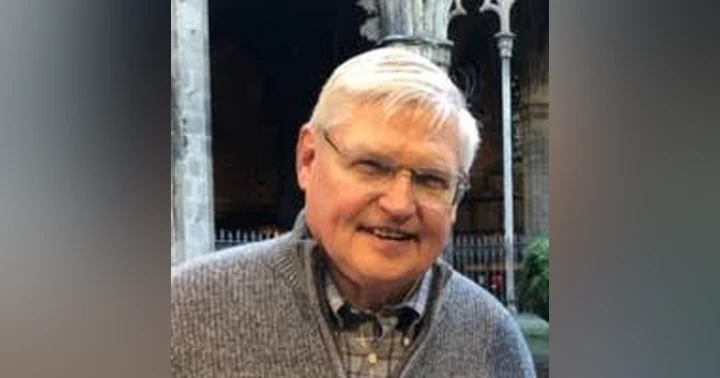
Navigating Transitions: Circles, Triangles, and Leadership in Faith Communities with Jonathan Massimi


 Apple Podcasts
 Spotify
 RSS Feed
 Show Notes: To Be and Do
Guest: Jonathan Massimi, Managing Director at Civic Bloom
Host: Phil Amerson
Episode Overview
In this reflective episode, Jonathan Massimi delves into the complexities of leadership transitions within faith communities. Drawing from his experiences in Kitchener, Ontario and the frameworks of asset-based community development (ABCD), Jonathan Massimi and Phil Amerson explore how structure and spontaneity coexist, the role of institutional frameworks, and the spiritual metaphors that help communities grow through moments of uncertainty.
Three Key Takeaways
1. The Importance and Paradox of Structure During Transitions
Jonathan Massimi shares vivid examples highlighting the tension between hierarchical “triangles” (formal structures) and communal “circles” (relational communities) 04:18. In times of transition—like the recent resignation of a pastor—faith communities face instability, uncertainty, and competing reactions: worry, excitement, nostalgia, and power dynamics among those who step up to fill leadership gaps 01:23. Jonathan Massimi argues that while circles foster participation and community, some structure is necessary to provide direction and prevent the loudest voices from dominating 05:12. The challenge, he notes, is finding the right “geometry”—using structure not to restrict but to “prop up” healthy circles, akin to an ice cream cone supporting the scoop 13:29.
2. Balancing Inclusion and Leadership Ownership
The episode discusses how leadership in communities is most effective when it invites widespread participation while maintaining clear roles. Phil Emerson offers a personal anecdote involving servant leadership expert Robert Greenleaf, who taught that strong leaders must include others in leadership to prevent disconnect or overreach 08:32. Jonathan Massimi reinforces this by pointing out the hazards of unchecked individual ownership (like the person who controls a church kitchen to the exclusion of all others) 10:48. Effective community renewal requires both acknowledging internal gifts and welcoming external talents in a dynamic, ongoing balance.
3. Spiritual Metaphors: Breathing and the Table
Jonathan Massimi introduces metaphors of “breathing” and “the table” to express the rhythm of community life and faith 12:41. Healthy communities inhale (welcome new energy from outside) and exhale (release their own gifts to the wider world), creating cycles of growth 13:01. The conversation culminates with the image of the table, especially as seen in the Emmaus Road story, as a powerful place of revelation and belonging 16:26. These metaphors invite listeners to reconsider familiar religious practices and symbols as avenues for inclusion, transformation, and ongoing discovery.
Listen for practical wisdom on navigating organizational change, spiritual renewal, and the enduring tension between structure and freedom in community life.
Phil Amerson [00:00:01]:
Greetings, everyone. It's Phil Amerson with the To Be and Do podcast. And we're continuing conversations with Jonathan Massimi, Kitchener, Ontario, Canada. He's managing director at Civic Belonging. He's many, many things. And we've been talking about time and the centuries around us and wristwatches. But that means if we're thoughtful about that, we need to be careful in the way we think about the transitions in our lives, how time not only has shaped where we are in terms of institutions or communities, but these moments of transition will shape the future. And so, John, I know you've been thinking about leadership.
Phil Amerson [00:00:56]:
Dive in. Tell us some of the new ideas that you're bubbling that are bubbling in your head these days.
Jonathan Massimi [00:01:07]:
Thanks, Phil. Well, in terms of transition leadership, when we're working on, like, community spaces, currently finding myself within a faith community that's going through a time of transition. Pastor has announced their resignation. And now there's some planning happening what happens the next day after we say goodbye. So we, we've planned, we, we've planned the kind of like the, the desserts and where we're going to host and who, who, who's invited, but now it's kind of up in the air. What do we do the Sunday after the pastor is gone? And I've been through these transitions before, and what I'm finding more and more is there is a lack of stability because people relied so much on the leader. And now in this time of transition, people, some worry, some want to know what's next, others are very excited for a fresh start. Others are holding on to what was and saying, well, what's going to stop happening? What are we going to start doing? And also in the leadership gap, you have individuals that want to step up and kind of take control and that
Phil Amerson [00:02:48]:
those aren't always the best people to do it.
Jonathan Massimi [00:02:51]:
Yes. So you have power brokers that, that want to begin to lead. And when we're looking at faith communities in particular, there's a very low barrier to participating in leadership outside of, like, ordained leadership, because there are requirements and processes. I think sometimes we do work out of that scarcity mindset where we don't have enough and we'll take who we can get.
Phil Amerson [00:03:25]:
Right.
Jonathan Massimi [00:03:26]:
And I think in the past we've talked about this. Like being a volunteer is, it's not a theological category. Like, Jesus didn't say, well, hey, follow me, or we're gonna have, we're gonna fish for men on Saturday at 1 o' clock and meet me at the church. Right. It was this Deeper calling of vocation. So calling people into something deeper whereby they can utilize their gifts in service to God. So some of the things I'm thinking about, and I know in John McKnight's work with ABCD, he speaks about the circle that's present within the communities. Right.
Jonathan Massimi [00:04:18]:
And triangles, which are the hierarchies and institutions and systems tend to be more of hierarchies and triangles and communities are our circles. But what I'm struggling with currently is when we're looking at the church that has a desire to be in the
Phil Amerson [00:04:42]:
community,
Jonathan Massimi [00:04:45]:
when are the triangles actually needed to begin some structure internally? And it's not to say that we need a heavy hierarchy, but there needs to be, I'm finding a little bit of a structure in place whereby people know what direction we're going in and who's responsible for what. And I think when that's not articulated, people step up and it's often the loudest in the room. And maybe without the triangle, it doesn't give us a geometry to recognize circles or create circles.
Phil Amerson [00:05:33]:
Right?
Jonathan Massimi [00:05:34]:
Because. Yeah, and I'm thinking about that, like, how do we position ourselves so that we can live into. Into the circles within our community? And at a beginning stage, is a triangle needed? And. And I know you have experience in leadership.
Phil Amerson [00:05:58]:
How.
Jonathan Massimi [00:05:58]:
How did you navigate those spaces?
Phil Amerson [00:06:04]:
Well, it was. It was different in every different space. You know, always pulling on me around. John McKnight was another mentor I had Robert Greenleaf, who wrote about servant leadership. And I had the good fortune of being with him. I'll tell you, I'll tell you a quick story if I can make it quick. I remember visiting with Greenleaf, who had been a Vice President at AT&T. And he, he talked about.
Phil Amerson [00:06:41]:
He was sort of the house radical and kept them always thinking in new, creative ways. And Bob, I once made the mistake of saying, you know, elites, what these elites, you know, they want to. They want to run everything. And Bob looked at me and said, and you think we would survive without them? And it caught me up short. So the quick story is this. We were working in an inner city neighborhood in Indianapolis, and boy, did I have great ideas about how we were going to organize a summer program that had basically been basketball for the boys and cheerleading for the girls. And we were going to do all these other wonderful things based on the Danish folk school model of people. And it was finding their gifts, learning how to explore writing or dance or drama or whatever.
Phil Amerson [00:07:44]:
And I wrote this eight page proposal and sent it to Bob Greenleaf and He wrote me back a little postcard, and all the postcards said on it was, Phil, this is a great idea. Don't you do it. And I was so flustered by it. And this was before we had cell phones. I was on my way to St. Louis from Indianapolis, and I stopped two or three times trying to call Bob. And I finally got him on the phone, and I said, Bob, you've confused me here. I sent you this proposal of what I was going to do.
Phil Amerson [00:08:20]:
And Bob started laughing, and he said, I didn't mean for you to read that. Don't you do it. I meant you to read it. Don't you do it. Meaning you're going to take the lead but include others in the leadership as well. And that was a life lesson for me. I think you can get too far ahead. I think you're right about the triangles.
Phil Amerson [00:08:48]:
Somebody's got to fill in those spaces. But you can also get too far ahead of the group if you don't find ways to build some other sense of ownership. And even passing it off now that's dangerous. I've passed off leadership and regretted it. So, yeah, it's a balancing act and one that I've never done. Perfectly.
Jonathan Massimi [00:09:15]:
Yeah. And thank you for that story. Even this idea of. So I used to work in the municipal world as well, and we have org charts and things like. So the challenge there was, how do I humanize and recognize people or build community within this triangle in the church world, yes, we do have, like, institutional structures, but on the Sunday morning, it is associational life.
Phil Amerson [00:09:53]:
Yep.
Jonathan Massimi [00:09:53]:
And my is like, how am I bringing. How can I bring structure into a circle? Right. Where certain voices don't push people outside of it.
Phil Amerson [00:10:08]:
Right.
Jonathan Massimi [00:10:08]:
And I'm not saying that, you know, we ever want to exclude people, but there are personalities that take up space in ways that don't allow others in.
Phil Amerson [00:10:27]:
Right.
Jonathan Massimi [00:10:30]:
So I've been at other parishes where the person that had the outreach ministry that involved the kitchen, well, they took very good care of the kitchen, but no one was allowed to use the kitchen.
Phil Amerson [00:10:46]:
Yes, I know those churches.
Jonathan Massimi [00:10:48]:
Yeah. Everything was locked up and things like that. So even if I had someone with the gift of cooking or a master chef in the congregation, they wouldn't have access to that kitchen because that person has taken ownership in a way that does not allow others in.
Phil Amerson [00:11:08]:
So help me with a metaphor, John, because I. I think there's a paradox here. The way I. The way I've been thinking about institutions and institutional renewal is that institutions gain strength as there is Clarity about roles from the inside out, who we are, what we do, but renewal and new vibrancy and conviviality. To use that word, word from another world often requires movement from the outside in. There's got to be a metaphor that shows that balance somehow of both, both the leadership needed for strength, working to build talents and gifts that are inside already. But then how do you welcome the talents and gifts that are outside as well? I've thought, I've thought of mangrove along, along the, the seashore and how they both protect the land but also allow for new life to, to come into near the shore.
Jonathan Massimi [00:12:29]:
Yeah. And I think in terms of like what's going through my mind right now, when we're thinking about the spirit at work in our midst, it is an act of breathing. Inhale, exhale.
Phil Amerson [00:12:43]:
Yeah. Right.
Jonathan Massimi [00:12:44]:
How are we inhaling or what is coming from external and then in turn, what is that doing? How are we exhaling and what is being released and both create growth. Right. So when we're exhaling our, our trees and things take it and, and then create, create oxygen. So it is, it is this act of breathing within the community. What's coming in and what, what's coming out. And also was thinking around like the, the circle and the triangle. I don't know why an image of like an ice cream cone came. Right.
Jonathan Massimi [00:13:29]:
So in order to like understand or really enjoy the ice cream, you need the triangle to hold it sometimes. Yeah, right. I understand. Like, you know, I want it in a cup. That's another thing. Right. But there's something to be said around the cone and there can be pleasure found in the cone where it supports the ice cream.
Phil Amerson [00:14:00]:
Right.
Jonathan Massimi [00:14:03]:
My daughter likes to lick it as quick as she can to get to the cone. So it is a way of propping it up. And we speak of ice cream cones and ice cream. So I'm thinking about that as well. What is the best way to prop up the circle in ways that are life giving and where people can enjoy it from the ice cream all the way down to the cone. And I think one of the challenges we have with the triangle is for many there's, they have found there's no life in it. It's boring. It's routines, it's meetings that should be.
Jonathan Massimi [00:14:52]:
That should have been an email. But structure enables things to happen. And I know we were talking before coming on about hockey. How horrible would a hockey game be if there wasn't rules? And now we're in playoff season. Fans go nuts when a ref misses a call because they're not following the rules.
Phil Amerson [00:15:16]:
Right.
Jonathan Massimi [00:15:17]:
It doesn't.
Phil Amerson [00:15:17]:
Or
Jonathan Massimi [00:15:20]:
so. And I know this can even tie into liturgy for us as well. Right. How does the liturgy create this form around us whereby we are then freedom within it to worship God.
Phil Amerson [00:15:37]:
Right, yeah. And liturgy is liter. So is liturgy the triangle or the circle?
Jonathan Massimi [00:15:48]:
I think it can be the triangle that leads us to the circle, which is the table.
Phil Amerson [00:15:52]:
Yeah, yeah, yeah, yeah.
Jonathan Massimi [00:15:54]:
And with the ice cream, we could talk about Sundays. So it all fits. It all works together.
Phil Amerson [00:16:06]:
Well, I. One of my crazy thoughts is I realize the cross is. Is the central symbol for Christianity, but more and more, I think the table ought to be right up there.
Jonathan Massimi [00:16:20]:
Yeah.
Phil Amerson [00:16:21]:
Most, you know, think of all the times the table is. Is critical. And, and of course, last Sunday's lection was the Emmaus road.
Jonathan Massimi [00:16:33]:
And that's.
Phil Amerson [00:16:33]:
That's that powerful, powerful story about they rec. He was recognized in the breaking of the bread.
Jonathan Massimi [00:16:39]:
Yeah, yeah. I actually with this transition, I was preaching this Sunday on. On that. And one of the things that I noted within that when we think about the gospel or the good news, we articulate in the idea of lost and found. It once was lost, now I'm found. But that story brings another element of the gospel around hide and seek. Right. So we often see Jesus hiding, retreating from crowds, cloaking his appearance so that we are then seeking him.
Jonathan Massimi [00:17:19]:
And then in that seeking, he's revealed. And when we see like the road to Emmaus, they're leaving Jerusalem, so they're going west. They're not going toward the south.
Phil Amerson [00:17:31]:
The wrong direction.
Jonathan Massimi [00:17:32]:
Wrong direction. Sunset, darkness. And God is revealed in an unseeing. They didn't even recognize who Jesus was. And then at the table is where. Where he's revealed to them in a new way. And what I share with the congregation is we see in this hide and seek gospel these phases where people have Jesus, then they lose Jesus, then they find Jesus, and then they'll find that they have to rethink Jesus. And what we see in Emmaus story is he's.
Jonathan Massimi [00:18:13]:
He. They found him. They're starting to rethink him, and then he's gone again. The process starts. It's. We can never have a hold of him.
Phil Amerson [00:18:23]:
Yeah, He.
Jonathan Massimi [00:18:25]:
He's always taken off somewhere and appearing in different ways whereby we have to rethink. And in the rethinking is how we grow.
Phil Amerson [00:18:34]:
Yeah, right. Yeah. Oh, there's so much more here. Well, we're going to call it an end to this one, but we'll do it again. Thank you, John. Philip Amerson for helping us think about leadership and community and how maybe paradoxically, you've got to look for both to have vibrancy and health. God bless. Bye Bye.
Phil Amerson [00:19:10]:
This is Phil Amerson for the Be and Do podcast.