

Mission Guatemala’s Story: Partnership, Health, and Lasting Change with Tom Heaton

 Apple Podcasts
 Spotify
 RSS Feed
 Episode Overview
In this episode, Phil Amerson sits down with Tom Heaton, founder of Mission Guatemala and longtime leader in missions and justice ministries in Indiana and beyond. Together, they explore Tom Heaton journey from local church challenges to creating a nonprofit making a tangible difference in rural Guatemala. The conversation touches on the organization’s origins, ongoing projects, guiding principles, and the power of genuine partnership.
Three Key Takeaways
1. Turning Frustration into Action
- Tom Heaton described how Mission Guatemala was born out of frustration with misplaced priorities in the local church—including a moment when complaints about scuff marks on a floor sharply contrasted with the realities he’d seen abroad, such as children without shoes. This perspective shift led Tom Heaton to embrace responsibility and move from “someone should do something” to actively being that someone. His experiences adopting children from Guatemala and witnessing need firsthand drove him to launch Mission Guatemala 05:31.
2. The Power of Partnerships and Community-Led Solutions
A recurring theme is that meaningful aid comes from partnership, not paternalism. Tom Heaton emphasized that Mission Guatemala does not impose solutions but listens to local communities and works alongside them. Projects, whether a medical clinic, computer classroom, or sanitation facilities, succeed because locals contribute “sweat equity.” This approach ensures both effectiveness and community pride, as seen in a story where parents, having helped dig a septic hole, took extra ownership in school bathroom maintenance 14:19.
3. Holistic Impact: Healthcare, Education, and Nutrition
Mission Guatemala’s work focuses on three priorities: health, education, and nutrition. Services range from a respectful medical clinic and pharmacy to running computer classes for middle schoolers (filling a governmental gap) and partnering with groups such as the Matteal Institute to provide high-nutrition food for infants and young children. The goal is sustainability and long-term change through local engagement, collaboration, and addressing real needs identified by Guatemalans 08:04 10:12.
Learn More
- To support or learn about Mission Guatemala, visit missionguatemala.com
- Want more stories of connection and belonging? Check out past episodes on our blog.
- ABOUT TOM HEATON
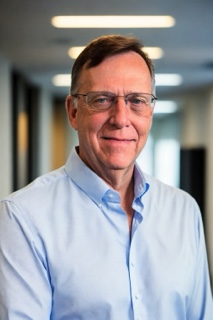
- Tom Heaton is a retired United Methodist pastor who served congregations across Indiana for nearly thirty years and later led mission and justice ministries for the Indiana Conference of the UMC.
- He is also the founder of Mission Guatemala, a nonprofit ministry serving rural communities in Guatemala through healthcare, education, nutrition, and community development. His years in Guatemala deeply shaped both his faith and the way he understands prayer, suffering, and the presence of God in ordinary life.
- Tom holds a Bachelor of Science in Communications from the University of Evansville and a Master of Divinity from Christian Theological Seminary. He writes and speaks about faith, prayer, grief, and everyday life with honesty, warmth, and a pastor’s heart.
- email: tsheaton@icloud.com
Phil Amerson [00:00:04]:
This is Philip again with To Be and Do Podcast. And we've had so many good folks to interview, but one who's especially I look forward to, one who I've known for, well, more years than I can believe, is Tom Heaton. And Tom, well, what do you say about Tom? He's served several congregations in Indiana from. For over 30 years. He worked in missions and justice ministries, not only as a pastor, but in the conference staff. And then he is the founder of Mission Guatemala. And many people know about that nonprofit ministry that works in rural communities in Guatemala. Healthcare, education, community development.
Phil Amerson [00:00:58]:
And those years were deeply shaping to Tom. So I'm not going to talk a lot. A good, good man. We're talking with him today. I'm in Bloomington and Tom's in Evansville. Both are favorite cities of mine. So welcome, Tom. It's good to visit with you today.
Tom Heaton [00:01:17]:
Good to be here. Good to see you as well.
Phil Amerson [00:01:20]:
So what's going on down along the river?
Tom Heaton [00:01:24]:
Well, it's been raining a lot, but, you know, it seems like you always talk about the weather when you answer that question, but, you know, raining a lot, but finally, finally a little bit sunny today, so we get to chat together on a sunny day.
Phil Amerson [00:01:38]:
Good, good. Well, I think Evansville's changed a lot since I lived there in the 1980s, but a lot of good things are happening as I read the papers and see what's going on.
Tom Heaton [00:01:51]:
Oh, you know, for sure, it's really probably the past 15 years or so, just a lot of new development, a lot of changes. You know, some things succeed, some things fail, but, you know, the city continues to. To move ahead.
Phil Amerson [00:02:10]:
Yeah, yeah. Well, it's a great, great city and a lot of good things go on there. How long have you lived in Evansville this time? I know you were.
Tom Heaton [00:02:23]:
You know, there's an old joke about Evansville, Phil, and that is like, you know, once you live here and move away, you almost always end up coming back. And so, gosh, you know, I' probably, I don't, I don't do good. A good job of, you know, keeping track of years. But, you know, Evansville has probably been what I've called home the past 20 years.
Phil Amerson [00:02:45]:
Wow.
Tom Heaton [00:02:46]:
You know, easily whenever. And I kind of count that time, my U.S. home, you know, that time when I was in Guatemala, we had a condo here in Evansville. So whenever I came back home, it was always to, you know, to Evansville. So I've been, and I've served churches, not necessarily directly in Evansville, but in the Evansville area, Mount Vernon and all that. So this is, this has kind of been a home base for me for a long time.
Phil Amerson [00:03:12]:
Yeah. And you're a graduate of the university there.
Tom Heaton [00:03:15]:
Graduated 1982, University of Evansville, Bachelor of science in communications and worked in business for a while before and ended up going into ministry.
Phil Amerson [00:03:26]:
Well, I know enough that I'll get in trouble if I say much more, but I know that you've been friends with city leaders and people in governmental and finance community, and I just thank you for being there there and helping make that city a vibrant place.
Tom Heaton [00:03:43]:
Well, I'm not as active here as I used to be. It's time for other people to kind of step up and do some of that. But I'm happy with the work I've done here in the past and I'm proud to support those who continue to try to carry good work forward.
Phil Amerson [00:04:01]:
Well, we're going to talk about a couple of things at least in our interviews, and you've already introduced one. Well, I introduced it and now you have. Let's talk about Mission Guatemala. How on earth did that develop? TOM Heaton
Tom Heaton [00:04:18]:
I always say, I always say, do you want the honest story or me to kind of, you know, dance around it? In some ways, Mission Guatemala started with my total frustration of dealing with difficult people in the local church, which I know it's going to be hard for people to believe that sometimes there are difficult people in the local church. But there was a day that people came to me complaining about children leaving scuff marks on the family life center floor.
Phil Amerson [00:04:54]:
Tragic.
Tom Heaton [00:04:54]:
And I said, I sat back and thought, you know, I know children that don't have shoes. Yeah, that's a crisis. Scuff marks on the floor, you know, are not, are not a crisis. I have two sons that have since passed away, but I adopted from Guatemala. And so that started, you know, the connection with that country. And as I traveled there, I continued just to kind of see the great need. And there's a great, there's a great Lily Tomlin quote. Lily Tomlin said, I used to say somebody should do something about that.
Tom Heaton [00:05:31]:
And then I realized I was somebody. And so I thought, you know, if, if I want to, if I want to do something about it, then I've got to kind of step up and try to make the difference. So I, that's, I'm not sure you can point to any, like, one thing that kind of got me there and got me going. But it was just a whole series of things and, you know, life situations and processes and just finally realizing, you know, you either talk about it or you do something about it.
Phil Amerson [00:06:01]:
Well, you've made a remarkable difference. My, my, the people who have been a part of that and who've had life changing experiences, I, if I started naming them, there would be a story or 10 with each one.
Tom Heaton [00:06:15]:
Well, September 1st, this coming September 1st will be the 16th anniversary.
Phil Amerson [00:06:20]:
Wow.
Tom Heaton [00:06:21]:
Of, of that ministry there. And I'm not actively involved in it anymore, although I, I'm actually going to be traveling back to Guatemala in a couple of weeks, you know, for a little while and I, I will, you know, be there on site, but I generally know what's going on and I get asked from time to time for some guidance and wisdom on, on, on situations there. Largely because the current young man directing the organization now, Dave Burns. Dave and I started the organization together and so sometimes it's just easier to say remember 13 years ago when this happened? Rather than try to rehash it with someone that doesn't know. But it's yeah, 16 years. Hundreds and hundreds and hundreds of mission team members have served alongside us and the Guatemalan people. And it's just been a, been a really exciting time.
Phil Amerson [00:07:17]:
So what do you see for the future for Mission Guatemala and maybe even talk more largely about the people of Guatemala?
Tom Heaton [00:07:27]:
Well, let me, you know, Mission Guatemala has, you know, focuses right now on health. The medical clinic was what was the first thing that started there. And it's, you know, I don't know how many thousands of patients a year now go through the clinic. It's very difficult for Mayan, indigenous, Mayan, Guatemalan people to go to a public health center and sometimes get the respect that they, that they, that they deserve there. And so they always get respectful, careful treatment at our clinic. That's one of the top, you know, top priorities there. And over the years that clinic has expanded into an amazing pharmacy that's there. It doesn't do you any good to realize you're sick but not be able to have medicine to make a difference.
Tom Heaton [00:08:21]:
There's a church in North Carolina that helped buy the equipment and continues to sponsor a lab, a medical lab there on site so that blood tests and certain tests can be run. And our amazing doctor there has started diabetes clubs, expectant mother clubs, things that can kind of help continue to support people during that time. So the healthcare has been a big part of it. We support the education system there. The biggest way in which that's done is this is typical government at work, but middle school students are required to have a computer Class, a keyboarding class, computer class. But the government does nothing to supply the computers, the teacher, or anything like that. So Mission Guatemala has partnered with the middle school, what would be the equivalent of middle school in San Andreas, where we're located. And we actually have a computer classroom there.
Tom Heaton [00:09:28]:
And students come and get regular computer training and learn how to, you know, how to keyboard, how to use, Use a computer. Nutrition is also the other big focus, and right now that nutritional focus is on infants to children 6 years old or so. We've partnered with a foundation in Dayton, Ohio, out of Dayton, Ohio, for a product called Chispuditos, which is a highly nutritious food product children can have in a. In a form that they typically eat and drink in. In Guatemala, we're not trying to introduce something new. It's in a form they either drink there and provides really high, you know, high nutrition. I mean, the, the mothers whose children begin on this program come back a few months later and say, I just can't believe, you know, my child isn't sleeping all the time. They're active, they're doing things.
Tom Heaton [00:10:24]:
They're, you know, they're. And it's just been real exciting. So how did, how did you come
Phil Amerson [00:10:30]:
up with this or who came up
Tom Heaton [00:10:32]:
with it with the, with the nutrition program?
Phil Amerson [00:10:35]:
Nutrition program? Yeah.
Tom Heaton [00:10:39]:
That was. At one time we had a really strong connection with the Pack Away Hunger organization that's located out of. Out of the Indianapolis area there, because we were doing feeding programs in a lot of the schools. And so they had a food product that we were able to, to get with them. Churches would do packing programs and we'd break containers, ship it down. Now the government has actually stepped in and begun providing the snacks and the things that should be done at a lot of the schools. So we dropped that, that program with, with Pack Away Hunger. But one of their board members was the executive director of the Matteal Institute, who, Who we partner with on this.
Tom Heaton [00:11:29]:
And we, we reached out to him and that was kind of how that, that whole program began, because they were introducing it in several areas in Guatemala. Guatemala is just behind Haiti. Our Haiti has the worst child malnutrition in the hemisphere. Guatemala second. And so, you know, this program's really just, you know, made a huge, A huge difference there. I think the Matteal family, who started the Matteal Foundation, Matteal Institute. I think Mr. Matteal's funding came out of pure.
Tom Heaton [00:12:08]:
I think he was one of the early purina.
Phil Amerson [00:12:10]:
I think that's right, folks.
Tom Heaton [00:12:12]:
So. Yeah, anyway, but that's how that developed. So if folks, I'm always networking, Phil, you know me, I mean, I'm always networking, trying to make connections with people.
Phil Amerson [00:12:23]:
You just said the magic word, connections.
Tom Heaton [00:12:27]:
Okay.
Phil Amerson [00:12:28]:
That's why we call this the belonging exchange.
Tom Heaton [00:12:30]:
Okay.
Phil Amerson [00:12:32]:
You know, we live too much in terms of stories of fear and separation and anger and what about some stories about how people are connected and how we all belong to one another? Maybe we need more of that. And it sounds like that's what Mission Guatemala is, is doing in many, many places. In many ways we've got a, you
Tom Heaton [00:12:56]:
know, the way that we have, have done ministry there and you know, continued to, to try to do that is it, is it, is it is all about partnerships, it's all about relationships. We do not pretend to go into a community or village and say you need this, get out of our way. We're going to do this for you because we know better than you do. But, but we, you know, we'll hear from a community, you know, what a need is. Early, early on, early on it was a little bit of a struggle because, and there's a lot of good, well meaning people that come to Guatemala want to help make a difference, start projects. And 18 months later, their doors are closed, they've gone, they've left. And so the communities there are used to, to seeing this happen, you know, happen a lot. But you know, we've been there 16 years.
Tom Heaton [00:13:56]:
You know, our supporters continue to support us to be able to make that difference. So right now, you know, there's probably more, more needs than Mission Guatemala can even begin, you know, to address. But people, people kind of, we used to have to seek those out. Now people come, come to us. But it's, it's all about, it's all about hearing those needs. And then most of the time, especially on a community development type project, Mission Guatemala kind of operates oftentimes under what we might be more familiar with, like Habitat for Humanity in that, you know, community. You need to have a little sweat equity in this project too. And so one example I can think of, you know, several years ago in a very rural, I mean, very rural school, you, I, I used to joke you would drive down roads to get to this school.
Tom Heaton [00:14:53]:
That in a movie when you would go down a road like that, nothing good ever happened at the end of it. You know, it was just kind of one of a scary, scary roads. But, but they wanted flush toilets, you know, for, for their schools. And you know, we said we think we can help you do that. But before we even begin to do that. There's going to need to be a septic hole dug. It's going to need to be, you know, so big. Our engineers, you know, would tell us how big it would need to be.
Tom Heaton [00:15:25]:
And your community has men, they have shovels. And once that hole's dug, you let us know and we'll come, you know, and, you know, complete the project. And, you know, we found, you know, through that, that the project is far more appreciated. Parents are telling, dads are telling their kids, you mess up that bathroom at school, you're in big trouble, you know, because he's put a lot of, you know, a lot of time and ingenuity in that. And there's been other, you know, projects where, you know, ground needs to be leveled before something can build, be built or whatever. And so the, you know, communities, you know, turn out to. To help make that happen, so.
Phil Amerson [00:16:03]:
Well, that's terrific.
Tom Heaton [00:16:04]:
There's good relationships there.
Phil Amerson [00:16:06]:
Yeah. Building. So if people want to support Mission Guatemala, what's the website? And we'll post it on the blog for this.
Tom Heaton [00:16:17]:
Yeah, it's a very clever URL. It's missionguatemala.com. it's .com and not.org.
Phil Amerson [00:16:26]:
okay.
Tom Heaton [00:16:27]:
But yeah. And there's in the upper right hand corner, like on many nonprofit sites, is a little button that says donate. And
Phil Amerson [00:16:36]:
so those of you who are viewing, find the donate button. And we're going to close out on this and we'll talk with Tom in another session. But Tom Heaton, thank you, my brother, for your work and for all that you have done and are still doing. Obviously you're still doing with Mission Guatemala.
Tom Heaton [00:16:57]:
Wildly blessed. I am wildly blessed.